Grand Loop
*If you wish to travel solo, you may book the 1 pax option, however, you prefer to travel in a group with others, let us know your preferred group size and we will give you a quote based on the availability. Contact us for further questions.
*Prices are determined by group size: the more people in a tour, the lower the price will be.
*For tour customization, feel free to contact and book a call with us by clicking on the button below:
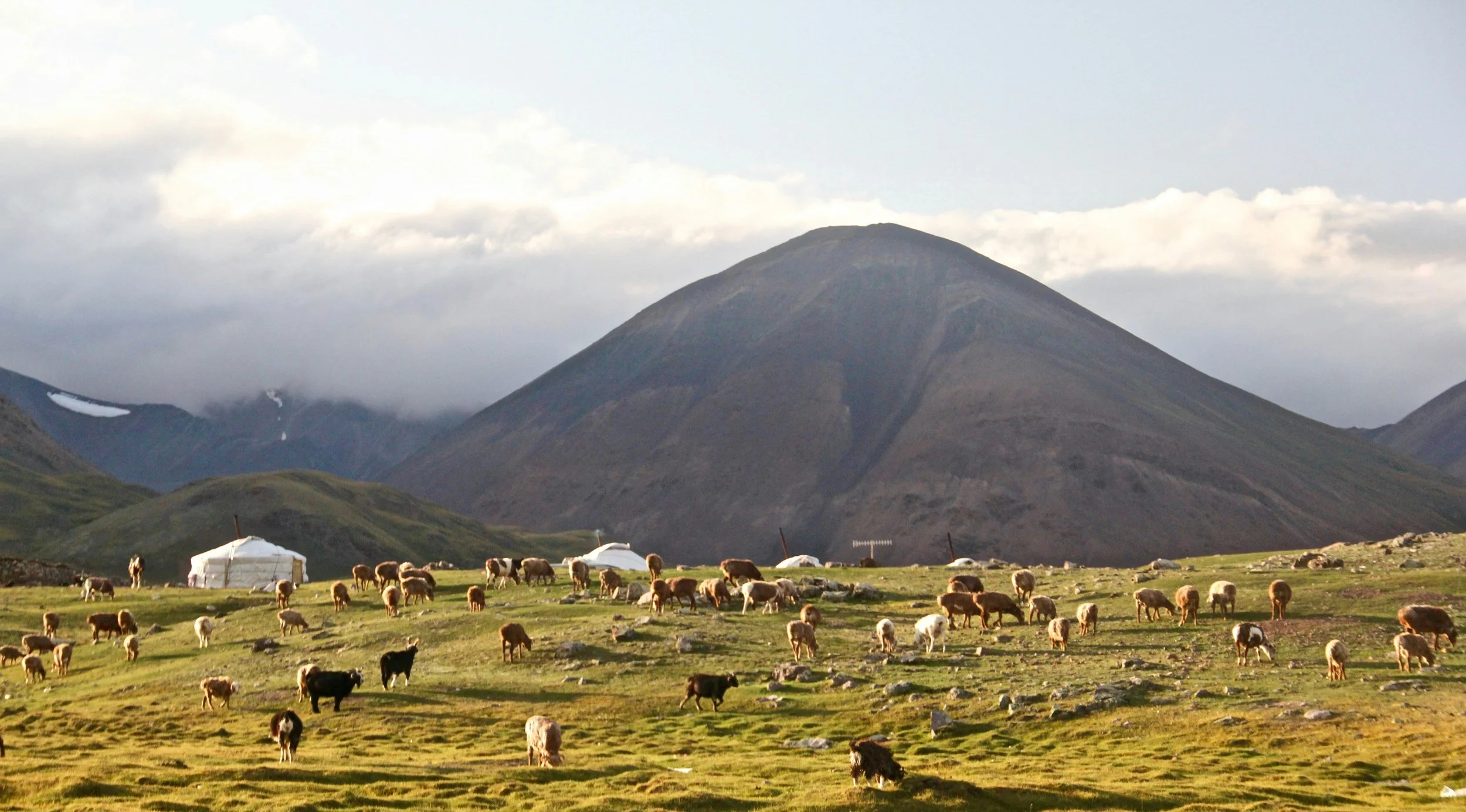
Embark on the definitive Mongolian odyssey, a journey crafted for those who seek the path less traveled. This 360-degree loop begins with an alpine introduction to Gorkhi-Terelj National Park and the towering Chinggis Khaan Statue Complex before plunging south into the sun-drenched expanse of the Gobi. You will traverse the granite labyrinths of Baga Gazriin Chuluu, the rainbow-colored escarpments of Tsagaan Suvarga, and the ice-filled volcanic canyons of Yolyn Am. The expedition continues through the shifting golden giants of the Khongoryn Els "Singing Sands" and the prehistoric red-rock graveyards of the Flaming Cliffs at Bayanzag, before tracing the spiritual history of the Ongi Monastery ruins.
The second half of the journey climbs out of the desert and into the volcanic heartlands of the Khangai range, taking the adventurous southern "backdoor" through the high-altitude pastures of Uyanga. This rugged route leads you into the UNESCO-protected Orkhon Valley to witness the thundering Orkhon Waterfall and the cliff-side sanctuary of Tuvkhun Monastery. After rejuvenating in the natural mineral waters of the Tsenkher Hot Springs, you will explore the ancient imperial capital of Kharkhorin and its legendary Erdene Zuu Monastery. The expedition concludes with a final wilderness encounter tracking the prehistoric Takhi wild horses in Khustai National Park, offering a comprehensive immersion into Mongolia’s most iconic landscapes and deep nomadic traditions.
WHAT’S INCLUDED
Accommodation

Transportation
Meals & Catering
Personal Guide
Activities & Fees
WHAT’S NOT INCLUDED
Flights


Single Supplement
Personal Expenses
Tips & Gratuities
Travel Insurance
Itinerary
-
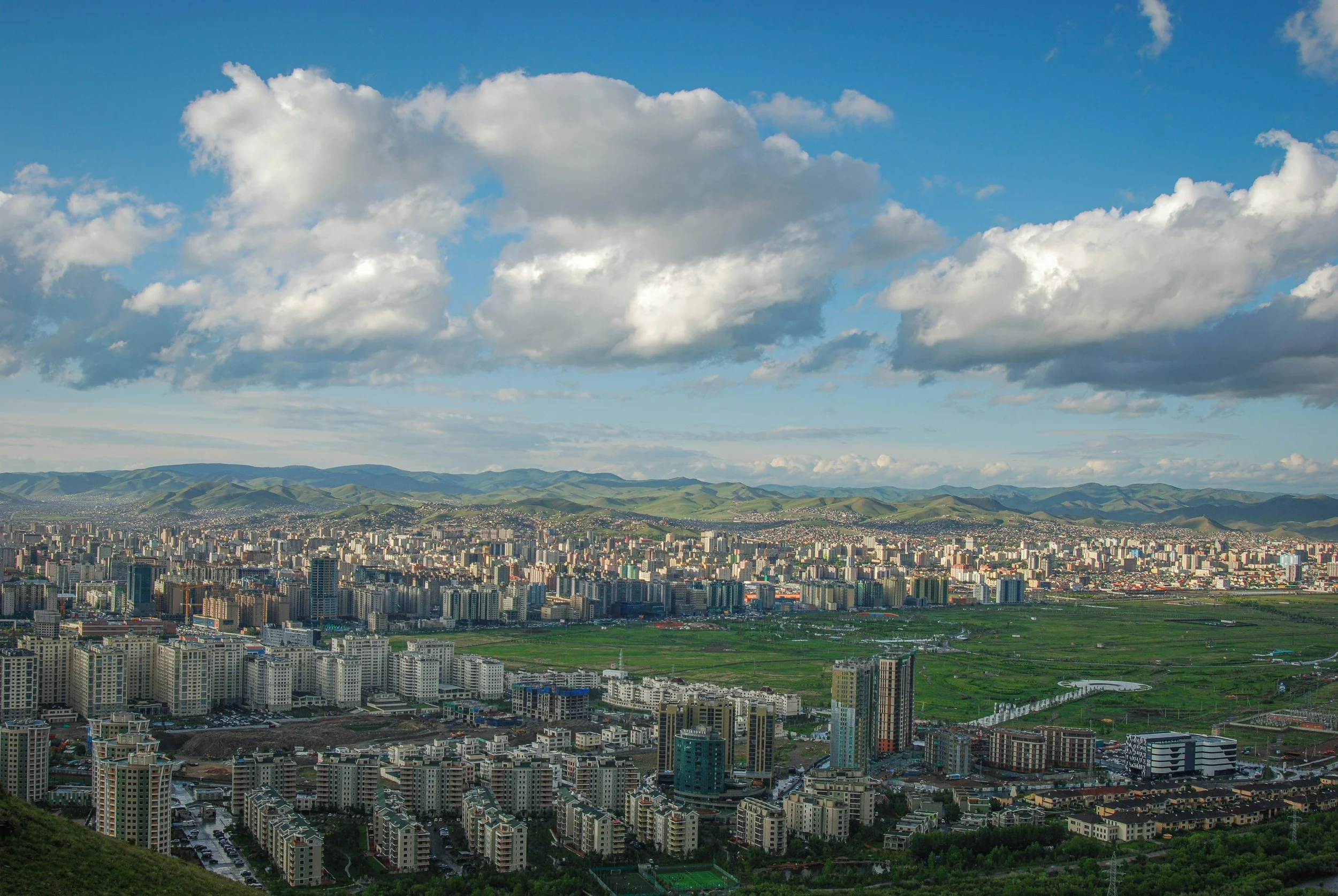
Morning: Private greeting at Chinggis Khaan International Airport. Transfer to the city to visit Gandan Monastery, where you can witness the morning chanting and see the 26-meter gilded statue of Megjid Janraisig.
Afternoon: Tour the National Museum to see the 13th-century artifacts of the Mongol Empire and walk across Sukhbaatar Square to see the massive bronze statue of Chinggis Khaan.
Evening: A welcome feast at Modern Nomads featuring a live Morin Khuur (horse-head fiddle) performance and traditional throat singing.
Stay: Hotel.
-
Morning: Depart the capital and drive south. Watch the urban landscape dissolve into the open, rolling green steppe of the Middle Gobi.
Afternoon: Explore the 15km granite massif of Baga Gazriin Chuluu. Hike to the hidden ruins of a 17th-century rock monastery and find the sacred "Eye Spring," a natural rock-well used by pilgrims for centuries.
Evening: Sunset photography among the "lunar" rock stacks. Enjoy your first night in a traditional Ger camp.
Stay: Ger Camp.
Distance: ~240 km.
-
Morning: Travel further south into the arid Gobi. Look for herds of wild Gazelles darting across the horizon.
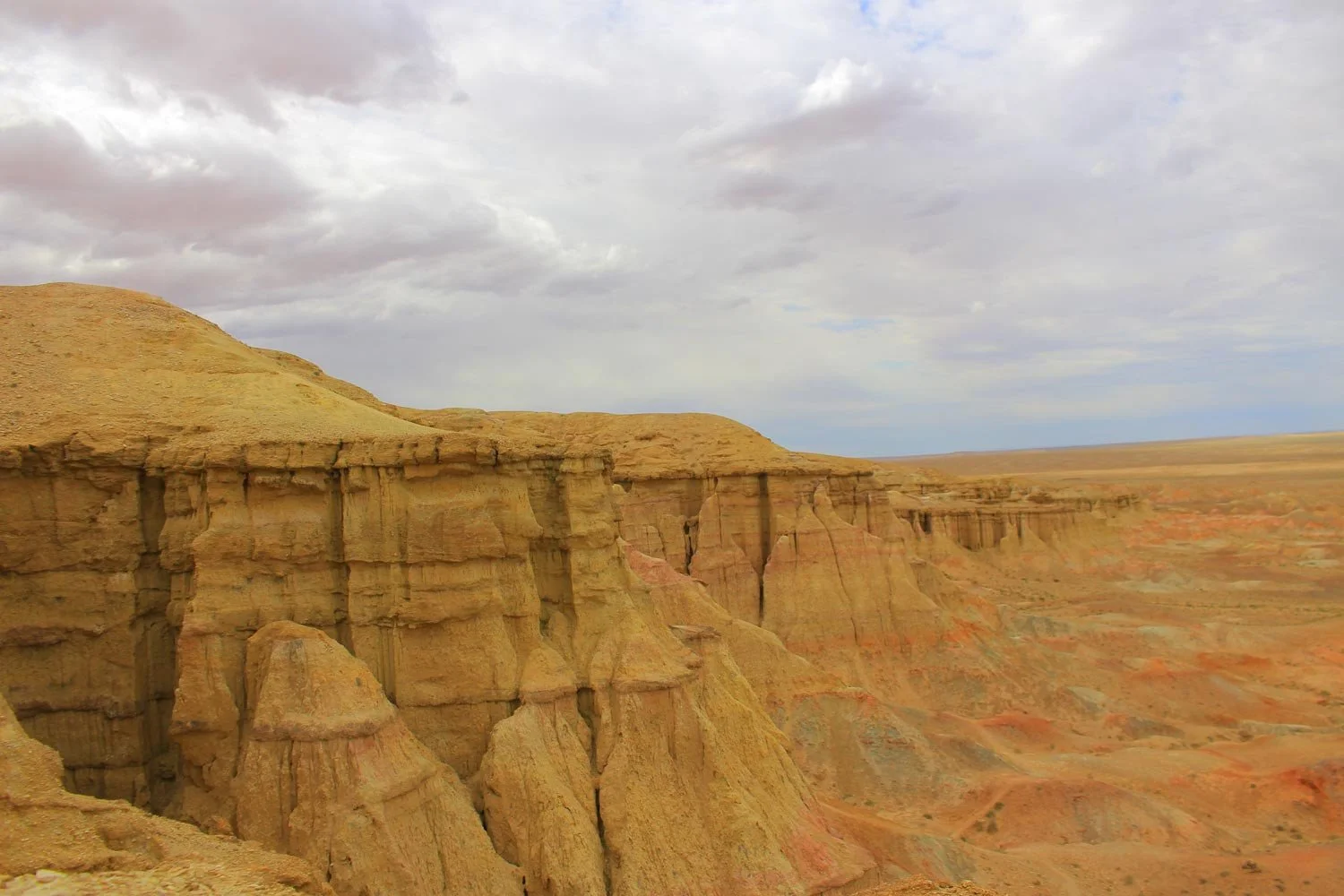
Afternoon: Hike along the edge of Tsagaan Suvarga (White Stupa). Explore the "Painted Floor" of this ancient seabed, where the wind has carved the limestone into 60-meter high towers resembling a white pagoda city.
Evening: Sundowners on the lodge terrace as the mineral layers of the cliffs change from white to pink and purple in the fading light.
Stay: Ger Camp.
Distance: ~200 km.
-
Morning: Enter the Gobi Gurvan Saikhan National Park. Ascend into the "Three Beauties" mountain range, where the desert temperature drops significantly.
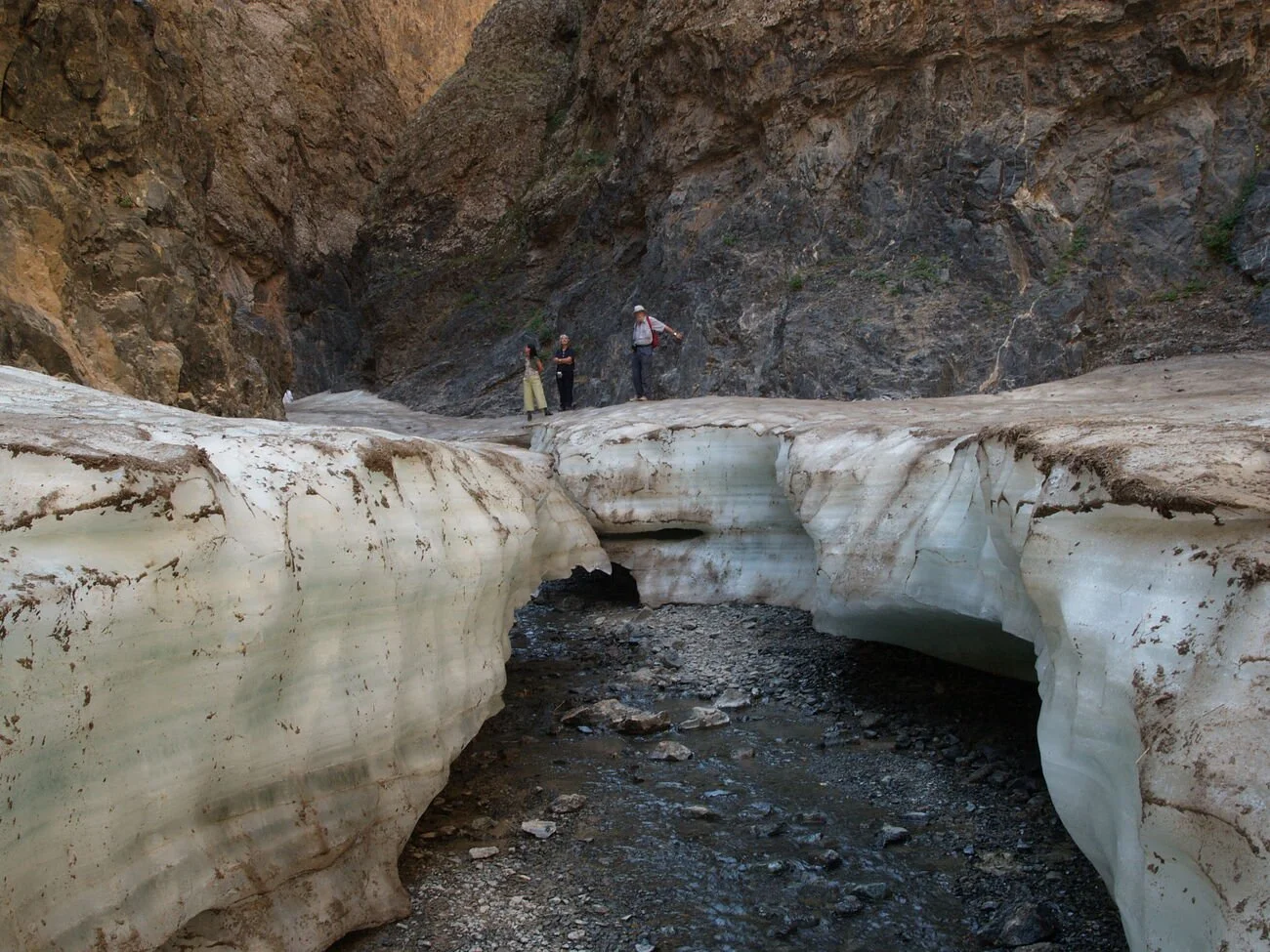
Afternoon: A 3-hour trek into the narrow Yolyn Am (Vulture's Mouth) canyon. Walk on the thick ice fields that survive deep into the summer. Keep an eye out for Bearded Vultures soaring above and wild Ibex on the ridges.
Evening: Traditional tea ceremony and a briefing on the region's unique high-altitude ecosystem at the lodge.
Stay: Ger Camp.
Distance: ~160 km.
-
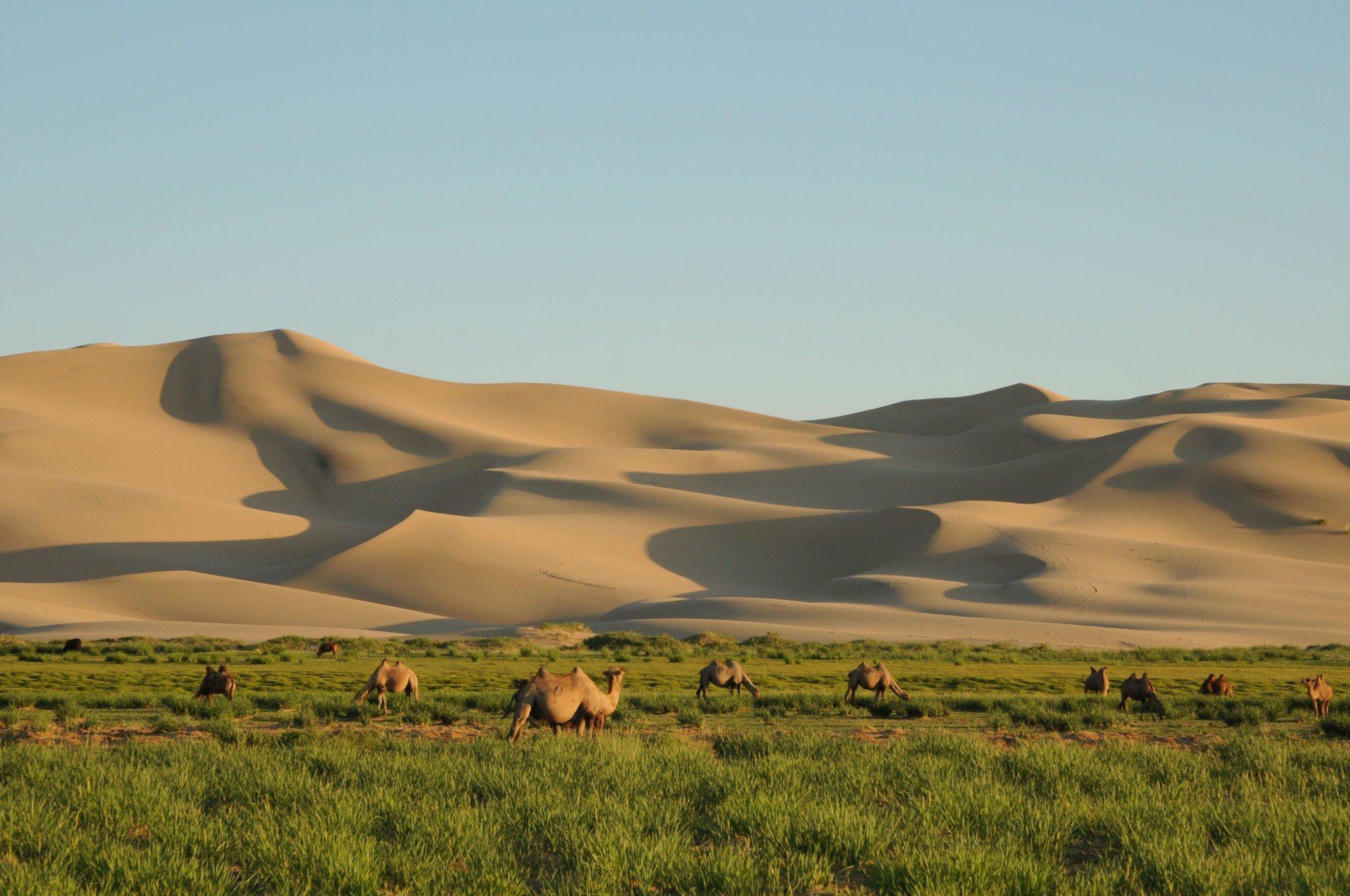
Morning: Off-road drive along the Altai mountain corridor to reach Mongolia’s largest sand dunes, stretching over 180km.
Afternoon: Arrival at the "Singing Dunes." After the midday heat, begin the challenging climb to the summit of the tallest dune (approx. 300m) for a panoramic view of the Gobi.
Evening: From the summit, witness the dunes turn into a golden sea. Listen for the "song" of the sand—a low-frequency vibration caused by shifting grains—before a fun "sand-slide" back down.
Stay: Ger Camp.
Distance: ~180 km.
-
Morning: Visit a local family of Bactrian (two-humped) camel herders. Participate in the morning milking and learn the secrets of their seasonal migrations.
Afternoon: Embark on a Bactrian camel trek along the Khongoryn River oasis, where the green meadows provide a sharp contrast to the massive golden sands.
Evening: Enjoy a private bonfire under a zero-light-pollution sky. The Milky Way is often visible from horizon to horizon.
Stay: Ger camp.
Distance: 0 km drive / 5 km camel.
-
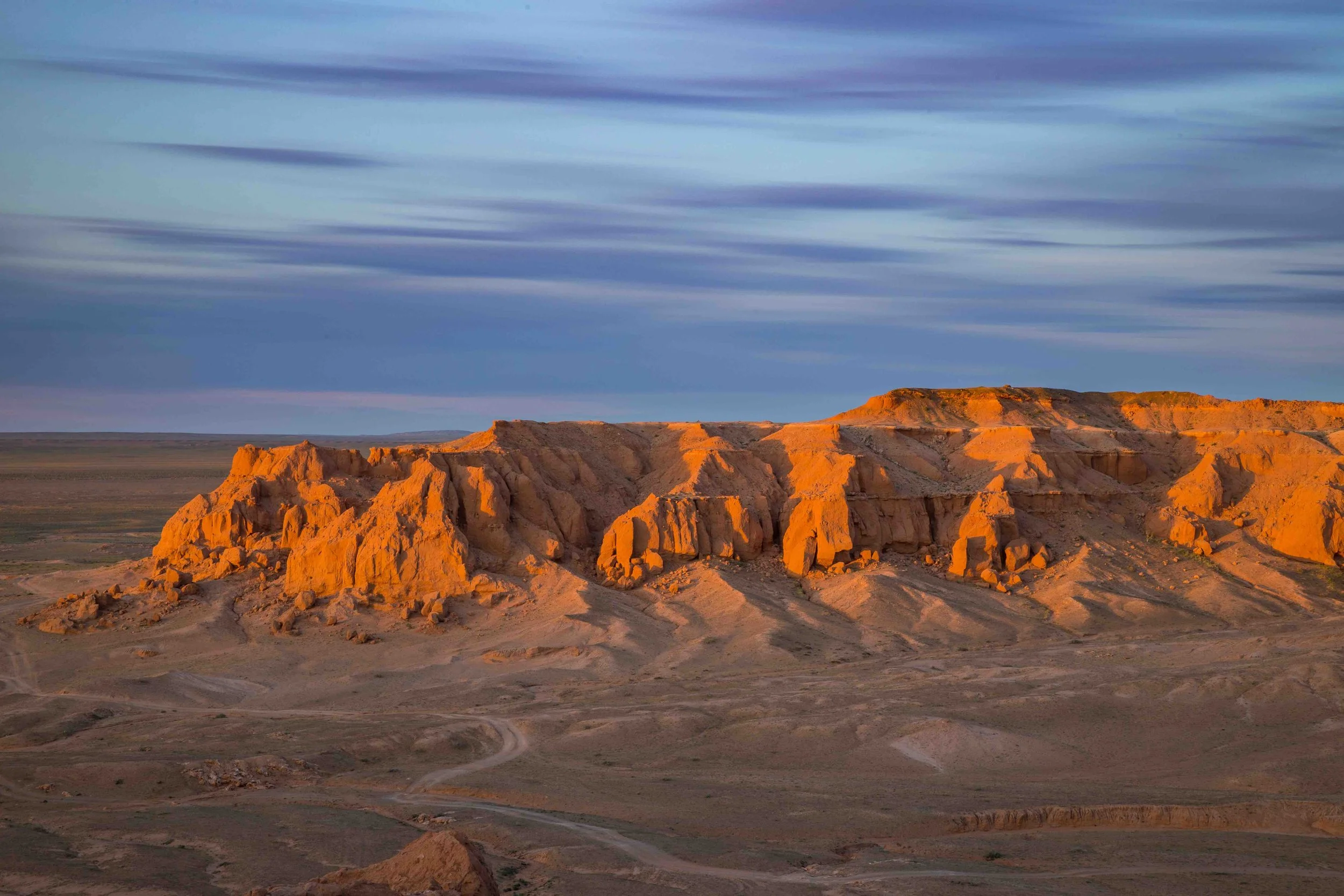
Morning: Drive to Bayanzag, the Flaming Cliffs. Hike through a rare Saxaul Forest—desert trees that grow for 100 years without leaves.
Afternoon: Explore the red sandstone ridges where Roy Chapman Andrews found the world’s first dinosaur eggs in 1923. Join your guide in a "fossil walk" along the red ridges.
Evening: Photography session during the "Golden Hour" when the cliffs glow red. Dinner features farm-to-table ingredients at the lodge.
Stay: Ger camp.
Distance: ~150 km.
-
Morning: Begin the journey north towards Central Mongolia. The desert scrub slowly transitions back into the lush, rolling steppe.
Afternoon: Explore the ruins of Ongi Monastery, once a massive Buddhist university. Visit the "Ger Museum" to see 18th-century artifacts rescued from the riverbed.
Evening: A peaceful riverside dinner. The sound of the Ongi River provides a tranquil background for your evening reflection.
Stay: Ger camp.
Distance: ~160 km.
-
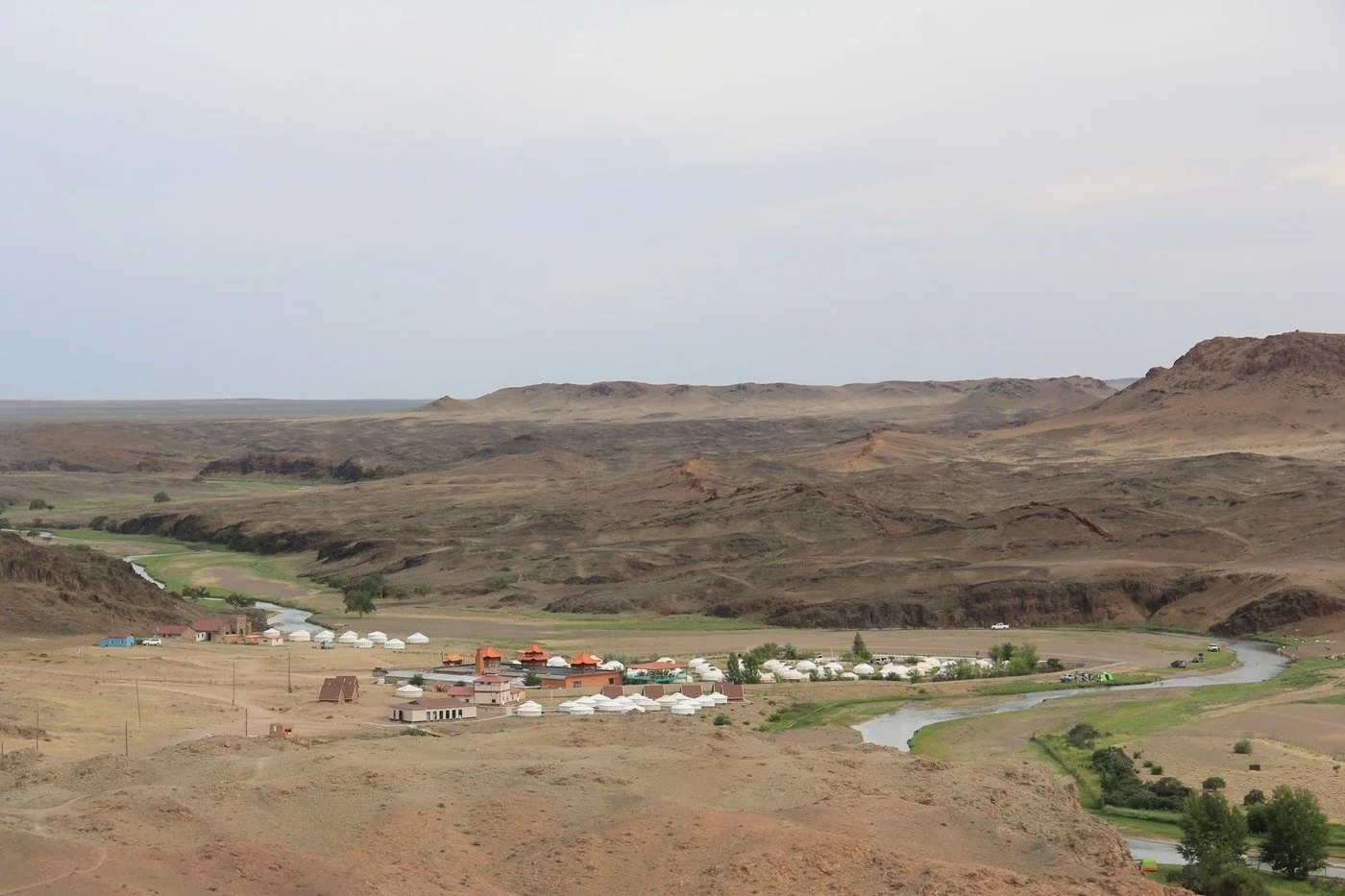
Morning: Journey into the Orkhon Valley UNESCO site, a landscape of ancient volcanic flows and deep river canyons.
Afternoon: Visit the 22-meter Ulaan Tsutgalan Waterfall. Take a light hike down the volcanic gorge to the river basin. Enjoy a picnic lunch by the spray.
Evening: Check into your mountain resort. The cooler, pine-scented air of the central forests marks a distinct change from the Gobi heat.
Stay: Ger camp.
Distance: ~250 km.
-
Morning: Saddle up for a Horseback ride (2.5 hours) through the larch-covered mountains to the peak.
Afternoon: Reach Tuvkhun Monastery, perched at 2,300m. Explore the "Mother’s Womb" meditation cave. Later, visit a Yak-herding family to learn how to make Urum (clotted cream).
Evening: A traditional meal featuring local yak dairy and mountain-sourced ingredients.
Stay: Ger camp.
Distance: ~10 km (Horseback).
-
Morning: Short drive to Karakorum, the 13th-century capital. Visit the Karakorum Museum to see artifacts from the Silk Road era.
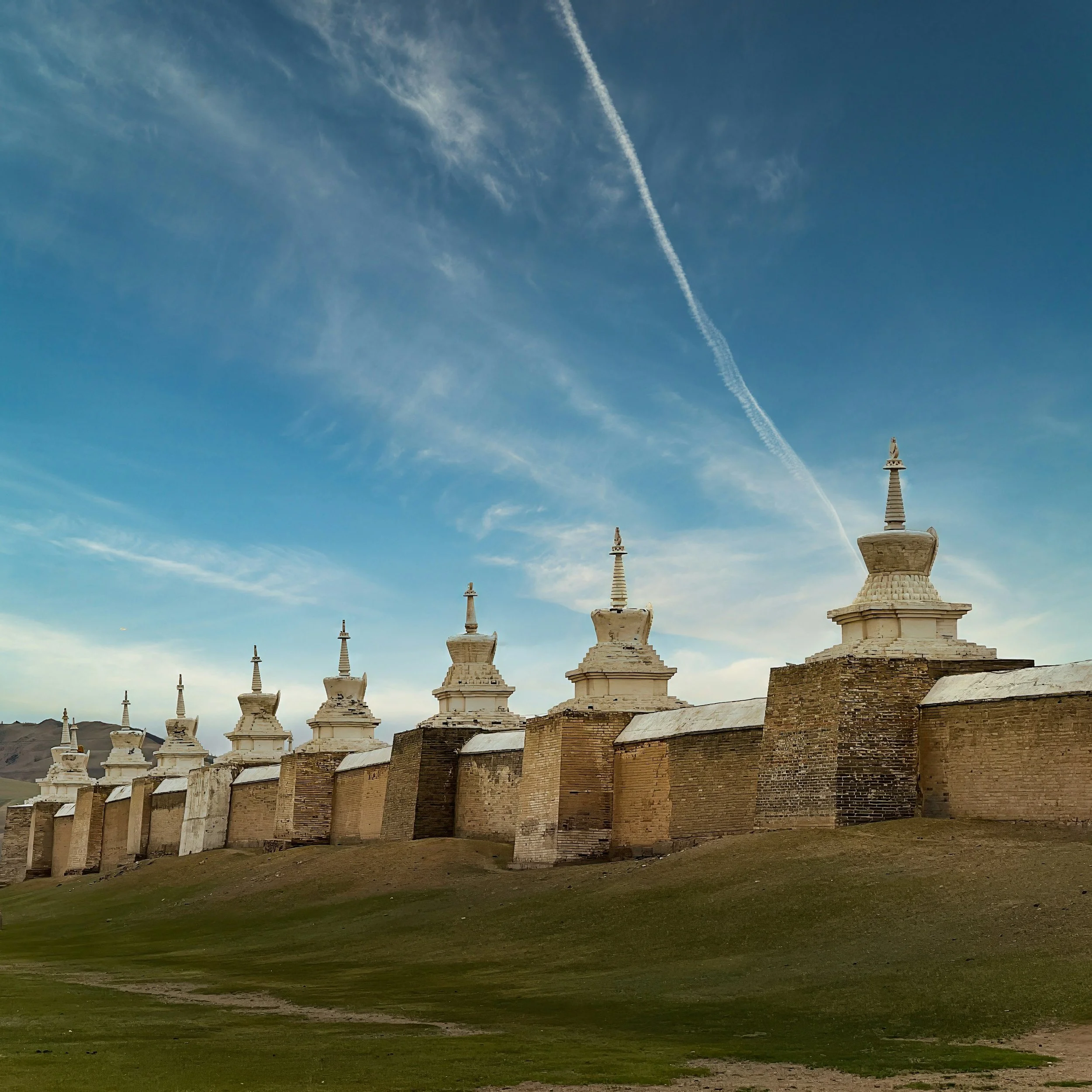
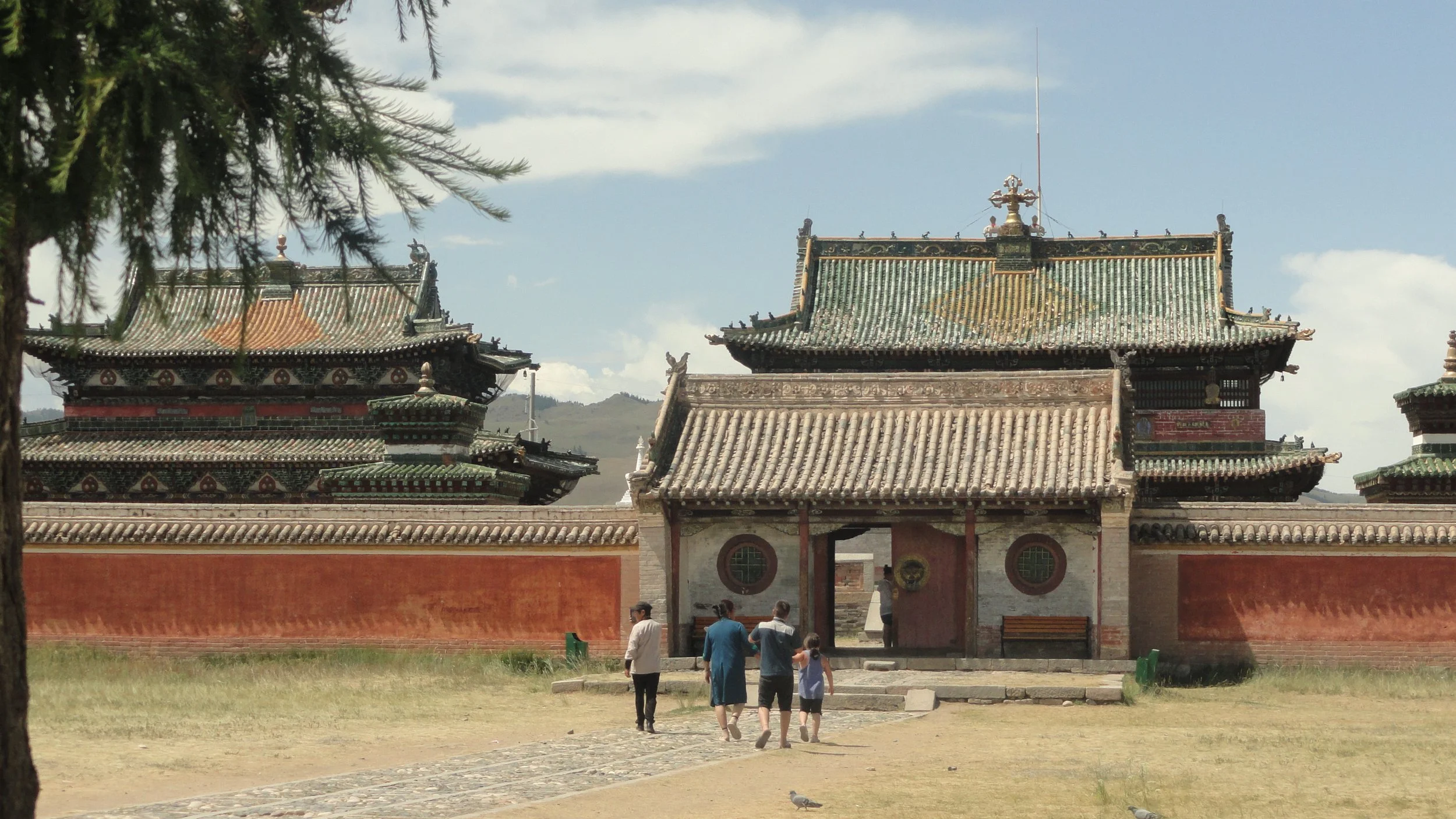
Afternoon: Tour Erdene Zuu Monastery, the oldest in Mongolia, surrounded by 108 stupas. Walk through the active temples to hear the monks' deep chanting.
Evening: Visit the King's Monument on a high ridge for a final panoramic overview of the Orkhon River.
Stay: Ger camp.
Distance: ~120 km.
-
Morning: Visit the "Mini-Gobi" (Elsen Tasarkhai) for a final walk on the sand. Proceed to Khustai National Park.
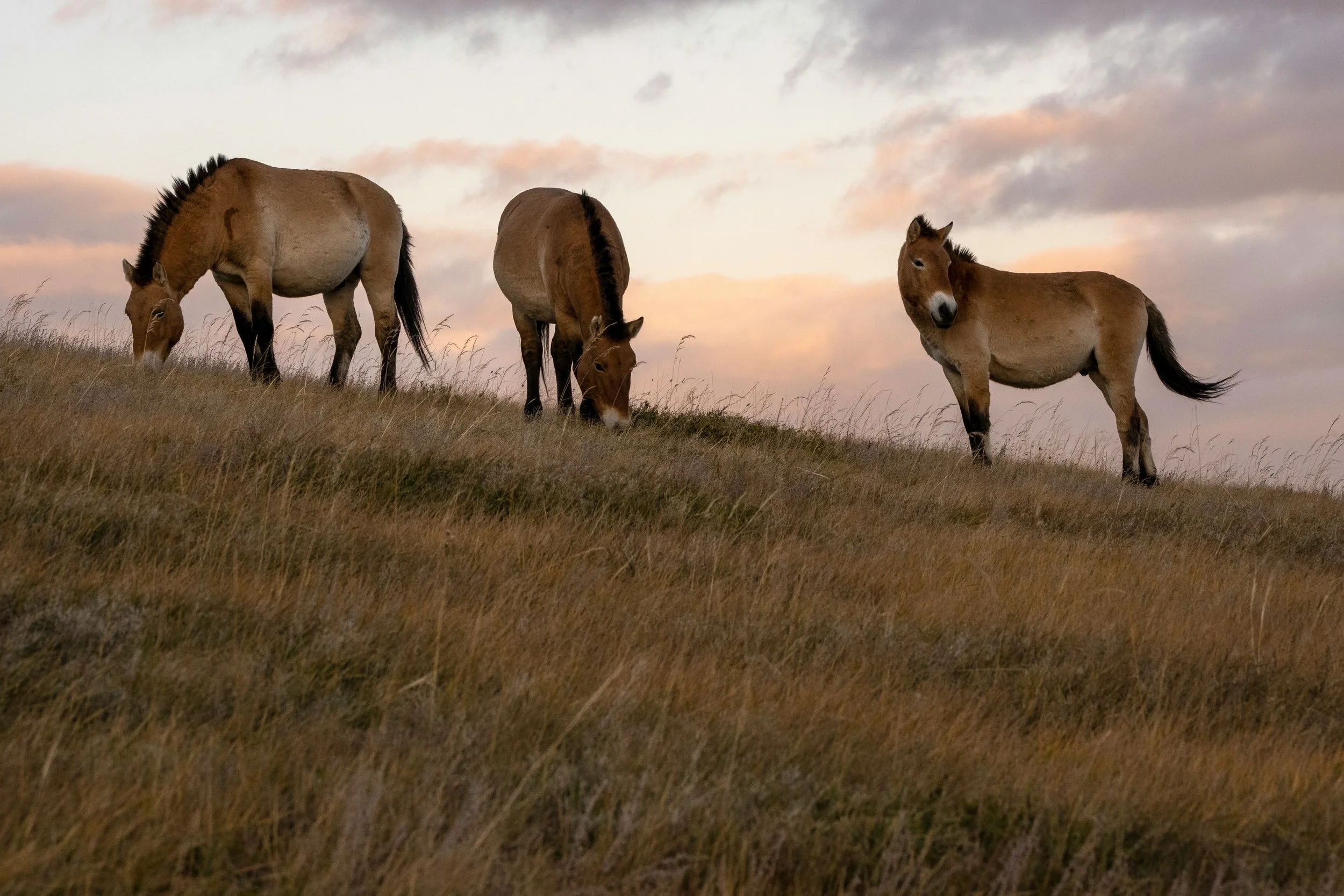
Afternoon: Visit the research center to learn about the reintroduction of the Takhi (the world's only true wild horse).
Evening: A sunset game drive to track the Takhi as they descend from the high ridges to drink at the springs.
Stay: Ger camp.
Distance: ~280 km.
-
Morning: A final breakfast in the countryside followed by a smooth drive back into Ulaanbaatar.
Afternoon: Visit the Gobi Cashmere Factory Store for luxury shopping. Afternoon at leisure for last-minute souvenir hunting.
Evening: Farewell dinner at Naadam Bar & Restaurant (Shangri-La) to toast the completion of the Grand Circuit.
Distance: ~100 km.
Extra Information
-
Reservation & Deposit
Deposit: To secure a spot on the 13-day tour, a 50% non-refundable deposit of the total tour cost is required at the time of booking.
Final Payment: The remaining 50% balance must be paid in full at least 14 days before the tour start date. For last-minute bookings (within 30 days of departure), full payment is required immediately.
Payment Methods: We accept bank transfers (SWIFT/Wise) and Paypal.
2. Travel Insurance (Mandatory)
Mongolia is a land of adventure, and the nomadic lifestyle involves remote areas. Comprehensive travel insurance is a mandatory requirement for all participants. * Coverage: Your policy must cover emergency medical evacuation, trip cancellation, and personal injury.
Adventure Activities: Ensure your insurance specifically covers horseback riding, as some standard policies exclude this.
Proof of Insurance: We require a digital copy of your insurance certificate before the tour begins.
3. Cancellation & Refunds
We understand that plans change. Our refund policy for the remaining balance is as follows:
31+ days before departure: 100% of the balance is refunded (minus the non-refundable deposit).
15–30 days before departure: 50% of the total tour cost is refunded.
Less than 14 days before departure: No refund is available.
4. Nomadic Stay Etiquette & Logistics
Facilities: Living with a nomadic family is a raw, authentic experience. Please note that guest Gers usually use traditional "pit latrines" and have limited electricity (solar-powered for lights).
Health & Diet: Please inform us of any allergies or dietary restrictions (e.g., vegetarian) at least 14 days in advance. Nomadic diets are heavily meat and dairy-based.
Passport: Your passport must be valid for at least 6 months beyond your date of arrival in Mongolia.
-
1. The Hydration Strategy
Don't wait for thirst: In the Gobi’s dry air, sweat evaporates instantly. You are losing water even if you don't feel "sweaty." Drink small sips of water every 20 minutes.
Electrolytes are key: Water alone isn't enough when you're traveling. Bring electrolyte tablets or powders to add to your water bottle once a day to prevent "travel fatigue" and headaches.
The "Pee Test": If your urine is dark, you’re in the danger zone. It should be pale yellow.
2. Mastering the Dust & Sand
The "Gobi Mask": When driving off-road or climbing the dunes, a Buff or bandana is your best friend. It keeps the fine silt out of your lungs.
Ziploc Everything: The Gobi dust is microscopic and can ruin expensive cameras and phones. Keep all electronics in sealed Ziploc bags when not in use.
Glasses vs. Contacts: For those who wear contact lenses, bring back-up glasses. The dust and wind can make contacts extremely irritating.
3. Beating the Midday Heat
The Siesta: We schedule our biggest climbs (like the Singing Sands) for sunrise or sunset. Between 1:00 PM and 4:00 PM, the best survival strategy is to stay in the shade of a Ger, drink tea, and nap.
Loose & Long: It seems counterintuitive, but long-sleeved cotton or linen shirts are cooler than tank tops. They create a personal "shade" for your skin and prevent sunstroke.
4. Motion Sickness & The Bumpy Road
The Gobi "Massage": Mongolian drivers call the bumpy off-road tracks a "Gobi Massage." If you are prone to car sickness, you should sit in the front passenger seat and bring ginger tablets or motion-sickness bands.
Look at the Horizon: Look out at the vast horizon rather than reading a book or looking at a phone while the vehicle is moving.
5. Nighttime Surprises
The Temperature Drop: The Gobi can drop from 30°C at noon to 10°C at midnight. Always keep a fleece or light down jacket at the top of your bag, even if the day feels boiling hot.
Scorpions & Critters: While rare, it’s a desert. Rule #1: Never leave your shoes outside the Ger. Always bring them inside and give them a quick shake before putting them on in the morning.
-
Packing for a 13-day journey through the Gobi Desert and the Orkhon Valley requires preparing for "four seasons in one day." While the Gobi is scorching during the day, the Orkhon Valley mountains can be cool and damp, and nights everywhere can drop significantly in temperature.
Below is your curated packing list for The Mongolian Odyssey.
1. The Layering System (Clothing)
Base Layers: 4–5 moisture-wicking T-shirts (synthetic or merino wool). Avoid 100% cotton as it stays wet if you sweat.
Long-Sleeve Sun Shirt: 1 lightweight, light-colored shirt with UPF protection to prevent sunburn in the Gobi.
Mid-Layers: 1 fleece jacket or a warm wool sweater for chilly mountain evenings.
Insulation: 1 lightweight "puffer" jacket (down or synthetic) that compresses easily.
Outer Shell: A high-quality windproof and waterproof rain jacket with a hood.
Bottoms: * 2 pairs of hiking trousers (quick-dry).
1 pair of shorts for hot Gobi afternoons.
1 pair of leggings or thermal long-johns for sleeping and cold mountain nights.
Riding Gear: If you plan to ride horses/camels, bring long trousers that aren't too "noisy" (nylon can sometimes spook horses) and avoid jeans with thick inner seams which can chafe.
2. Footwear
Hiking Boots: Sturdy, waterproof, and broken-in before you arrive. Ankle support is vital for rocky terrain.
Camp Shoes: Lightweight sneakers, Crocs, or sports sandals for relaxing at ger camps and using shared showers.
Socks: 4–5 pairs of wool-blend hiking socks.
3. Desert & Mountain Protection
Sun Protection: Wide-brimmed hat, high-SPF sunscreen, and polarized sunglasses with a strap.
Buff or Bandana: Essential for protecting your face/neck from dust during drives or wind in the Gobi.
Lip Balm: Get one with SPF; the air in Mongolia is extremely dry.
Insect Repellent: Necessary for the Orkhon Valley and areas near water where flies and mosquitoes are common.
4. Gear & Electronics
Bag: Use a soft-sided duffel bag (60–80L) rather than a hard-shell suitcase; it fits much better in the 4x4 vehicles.
Daypack: A 20–30L pack for water, camera, and layers during daily excursions.
Power Bank: Vital for long drives and camps where electricity may only be available for a few hours.
Headlamp: Essential for navigating ger camps at night (much better than a phone flashlight).
Binoculars: For spotting Ibex in Yolyn Am or wild horses in Khustai.
5. Health & Personal Care
"Ger Camp Kit": Quick-dry travel towel, biodegradable soap/shampoo, and flip-flops for showers.
Personal Meds: Include broad-spectrum antibiotics, anti-diarrheals (Imodium), and rehydration salts (electrolytes).
Wet Wipes & Hand Sanitizer: You will use these daily for "dry showers" and hygiene on the road.
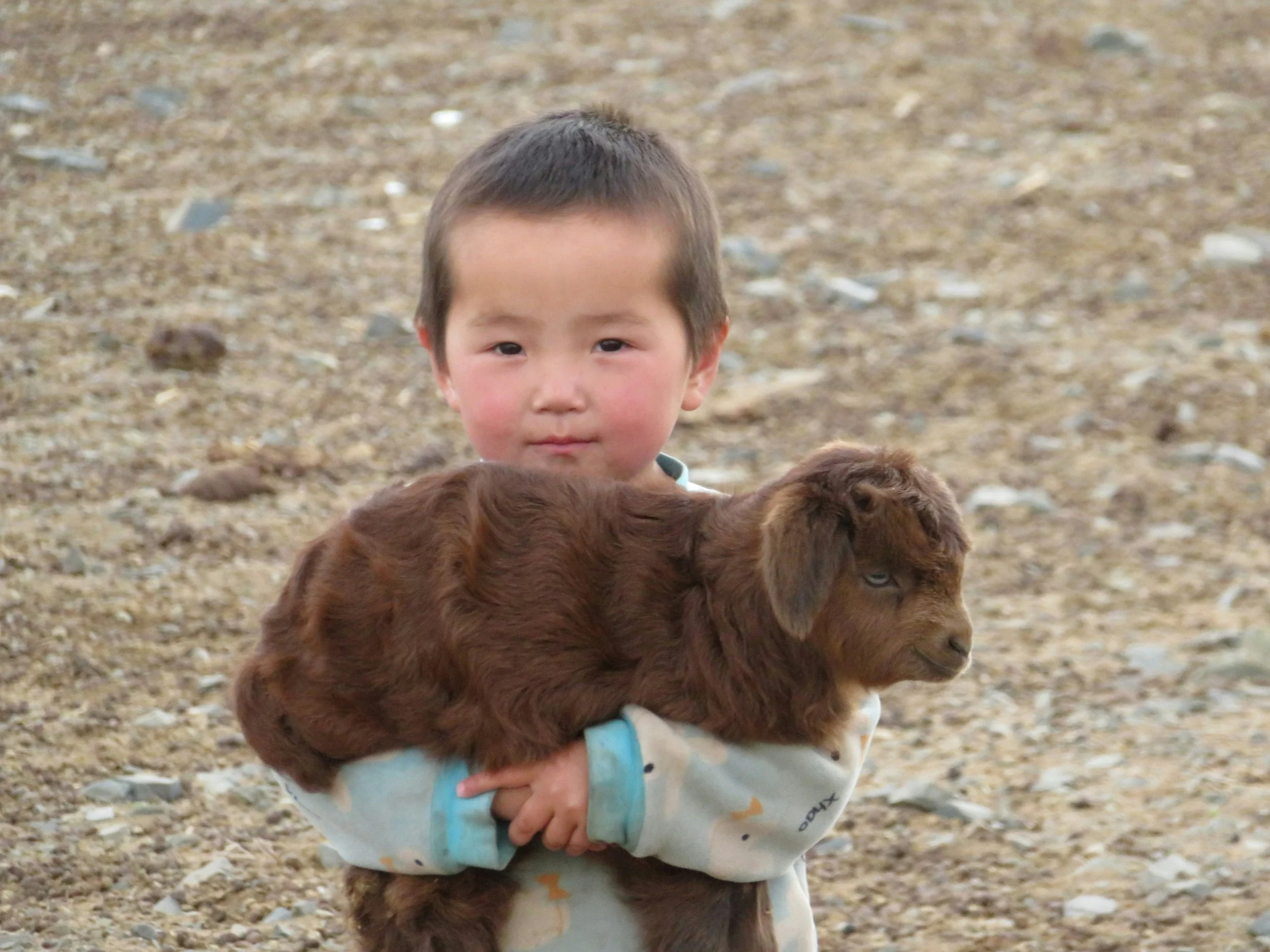
Gifts for Nomads: Small items like school supplies, localized picture books, or good quality tea/coffee are highly appreciated by host families.
-
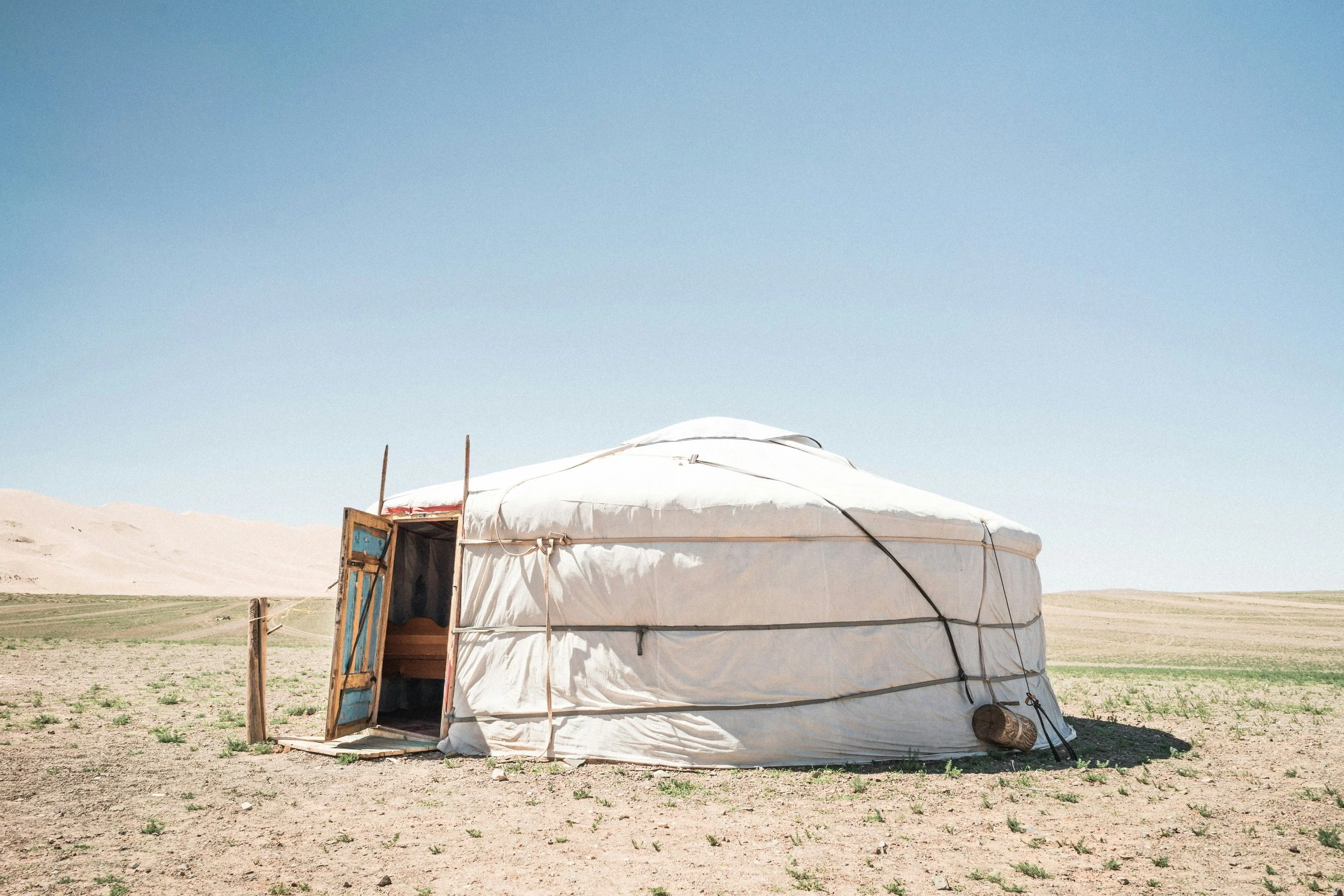
Mongolian nomads are world-famous for their hospitality, but their homes are considered sacred spaces. Following these simple customs will show your hosts that you respect their way of life.
Entering the Ger
The Threshold: Never step on the wooden threshold of the door; it is considered the "neck" of the home. Always step over it with your right foot first.
Don’t Knock: Traditionally, Mongolians don't knock. Instead, call out "Nokhoi khor" (literally: "hold the dog") to announce your arrival.
The Support Pillars: Never lean against or walk between the two central support pillars. These represent the stability of the family and the connection between heaven and earth.
Direction: Once inside, move in a clockwise direction. Guests are typically seated on the left (west) side of the Ger.
Food & Drink Rituals
The "Taste Test": If you are offered milk tea or a snack, always accept it with your right hand. Even if you aren't hungry, take a small sip or a tiny bite before putting it down. Refusing outright is considered impolite.
Right Hand Only: Always give and receive items (especially food, tea, or gifts) with your right hand. For extra respect, support your right elbow with your left hand.
Fire is Sacred: Never throw trash, water, or food scraps into the central stove. Fire is the most sacred element of the home.
General "Dos and Don'ts"
Feet Placement: When sitting, never point the soles of your feet toward the altar (at the back of the Ger) or toward other people. It’s best to sit cross-legged or tuck your feet under you.
Hats: Mongolians value the head as the most sacred part of the body. Never touch another person’s hat, and if you take yours off, place it in a high spot (like on a bed or a shelf) rather than on the floor.
Step on a Foot: If you accidentally step on someone's foot, immediately shake their hand. It’s the local way of saying "I didn't mean any harm."
Whistling: Avoid whistling inside the Ger; locals believe it "calls the wind" or brings bad luck to the household.