Valley Tour · Mongolia · Bestseller

Grand Mongolia Circuit:
Gobi & Orkhon Valley

13 Days / 12 Nights Gobi · Orkhon · Terelj ☀️ Summer · 🍂 Autumn Moderate Difficulty From $1,800 / person
13
Days
~1,900
km Covered
10+
Landmarks
100%
Private
☀️🍂
Best Season
The Journey
The definitive
Mongolian odyssey

Embark on a journey crafted for those who seek the path less traveled. This 360-degree loop begins with an alpine introduction to Gorkhi-Terelj National Park and the towering Chinggis Khaan Statue Complex before plunging south into the sun-drenched expanse of the Gobi. You will traverse the granite labyrinths of Baga Gazriin Chuluu, the rainbow-colored escarpments of Tsagaan Suvarga, and the ice-filled volcanic canyons of Yolyn Am.

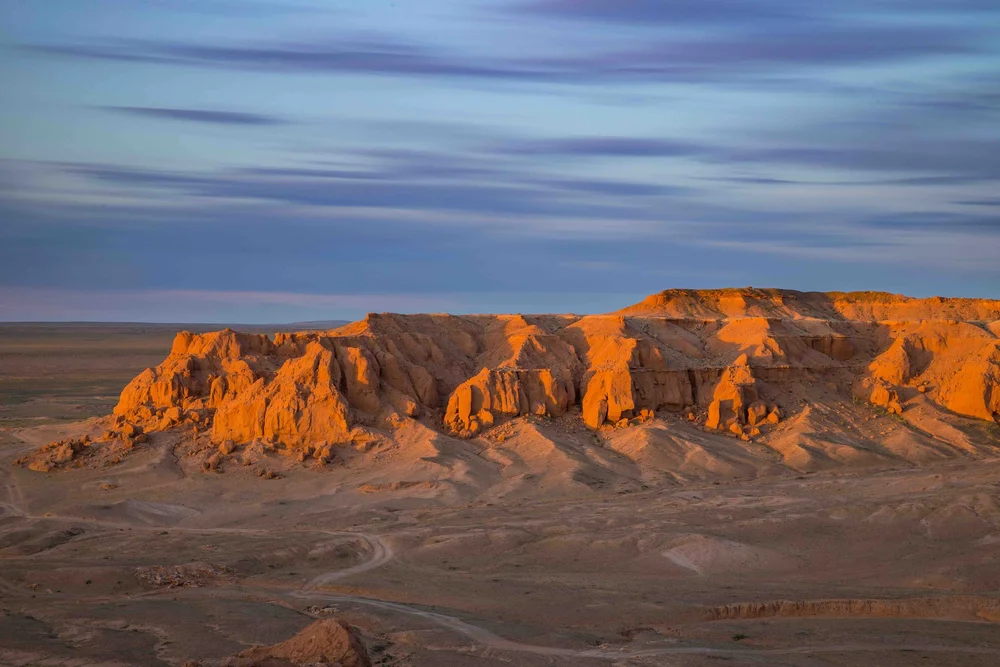
The expedition continues through the shifting golden giants of the Khongoryn Els "Singing Sands" and the prehistoric red-rock graveyards of the Flaming Cliffs at Bayanzag, before tracing the spiritual history of the Ongi Monastery ruins.

The second half climbs out of the desert into the volcanic heartlands of the Khangai range, taking the adventurous southern "backdoor" through the high-altitude pastures of Uyanga. This rugged route leads into the UNESCO-protected Orkhon Valley to witness the thundering Orkhon Waterfall and the cliff-side sanctuary of Tövkhön Monastery.

After rejuvenating in the natural mineral waters of Tsenkher Hot Springs, you will explore the ancient imperial capital of Kharkhorin and its legendary Erdene Zuu Monastery. The expedition concludes tracking the prehistoric Takhi wild horses in Khustai National Park — a comprehensive immersion into Mongolia's most iconic landscapes.

Tour Highlights
  • Gobi Desert & Orkhon Valley in one complete loop
  • Flaming Cliffs of Bayanzag — world's first dinosaur eggs
  • Khongoryn Els "Singing Sands" — 300m dune climb
  • Bactrian camel trek at the Khongoryn River oasis
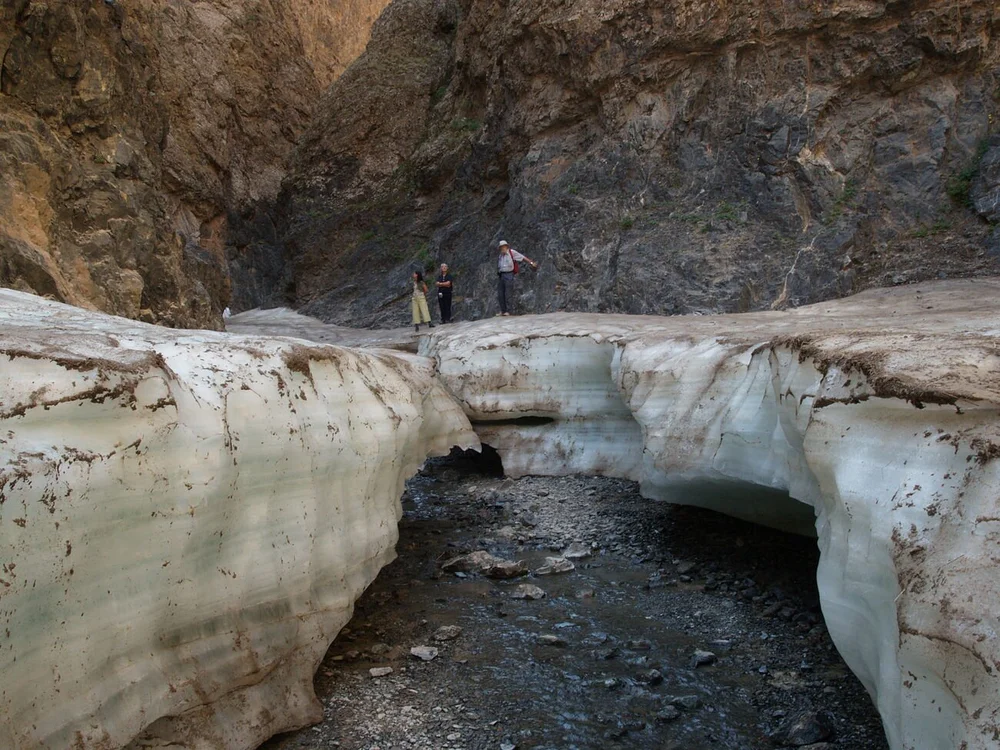
  • Yolyn Am ice gorge inside Gobi Gurvan Saikhan
  • Tsenkher natural mineral hot springs
  • Orkhon Waterfall & Tövkhön Monastery
  • Erdene Zuu — Mongolia's oldest monastery
  • Khustai National Park Przewalski wild horses
  • Nomadic family homestay experience
The Route
13 days · 360° Mongolia
GOBI DESERT Ulaanbaatar D1 · D13 Khustai NP D12 Baga Gazriin Chuluu D2 Tsagaan Suvarga D3 Yolyn Am D4 Khongoryn Els D5–6 Bayanzag D7 Ongi Monastery D8 Orkhon Valley D9 Tövkhön · Tsenkher D10 Kharkhorin D11 N ↑ Route (13 days · ~1,900 km) Stop ● Major stop MONGOLIA
Day by Day
Full Itinerary
01
Arrival Day
Ulaanbaatar — Arrival & Welcome
Morning
Your guide meets you personally at Chinggis Khaan International Airport holding a Valley Tour sign. After a smooth private transfer into the city, your first stop is Gandan Monastery — Ulaanbaatar's most active Buddhist complex, home to over 900 monks. Witness the hypnotic early-morning chanting ritual and stand beneath the extraordinary 26-meter gilded statue of Megjid Janraisig, one of the tallest indoor statues in Asia, painstakingly rebuilt after its destruction by Soviet forces in 1937.
Afternoon
Dive into Mongolian history at the National Museum of Mongolia, where exhibits trace the nation's story from the Paleolithic through the Mongol Empire to the present day — highlights include original armour, imperial seals, and intricate nomadic textiles. Afterwards, stroll across Sukhbaatar Square, the vast political heart of the city, dominated by the grand neoclassical Parliament Building and its iconic colonnade featuring Chinggis Khaan flanked by his generals Ögedei and Jochi.
Evening
Your journey begins in style with a welcome feast at Modern Nomads, one of Ulaanbaatar's finest restaurants for traditional Mongolian cuisine. The evening features a live Morin Khuur (horse-head fiddle) performance alongside mesmerising Khoomei throat singing — a UNESCO-recognised art form unique to the Mongolian steppe. Your guide will brief you on the road ahead over dinner and answer any questions before the adventure begins tomorrow.
02
Middle Gobi
Baga Gazriin Chuluu — Granite Labyrinth
Morning
Depart Ulaanbaatar south through the city's industrial outskirts. Within an hour the road gives way to open steppe, and the urban sprawl is replaced by rolling grass hills dotted with the occasional white ger. This is the Middle Gobi — drier and flatter than the south, but already alive with the scale and silence that defines this country. Keep an eye out for Mongolian gazelles moving in loose herds across the horizon. En route, your guide will introduce the nomadic seasonal cycle and point out the first herder families setting up camp.
Afternoon
Arrive at the extraordinary 15km granite massif of Baga Gazriin Chuluu — a landscape of bizarre, wind-sculpted rock formations rising from the flat steppe like a forgotten city. Hike into the heart of the formation to discover the atmospheric ruins of a 17th-century monastery built directly into the rock face. Seek out the sacred "Eye Spring" — a narrow natural fissure that produces clean water year-round and has been used by Buddhist pilgrims for over 300 years. The area is also home to the graves of two Mongolian kings, marked by ancient deer stones.
Evening
As the sun drops, the granite turns amber and the shadows between the boulders deepen dramatically — ideal for photography. Dinner is served at your first traditional ger camp: a cluster of circular felt tents set up by a local family, each with two beds, a wood-burning stove, and hand-painted furniture. Your guide will explain ger etiquette — enter clockwise, never step on the threshold, always accept food offered with both hands.
03
South Gobi
Tsagaan Suvarga — The Painted Cliffs
Morning
Continue south as the vegetation thins and the Gobi's true character begins to assert itself — the land becomes a canvas of ochre, sand, and silence. The road passes through small soum (district) towns where herder families gather to trade. Look out for Mongolian gazelles darting in graceful arcs, and scan the thermals for upland buzzards and cinereous vultures. The air is noticeably drier and sharper here, and the landscape has begun to feel genuinely remote.
Afternoon
Arrive at one of the Gobi's most visually arresting formations: Tsagaan Suvarga — the White Stupa. This 30-metre high, 400-metre wide escarpment is the exposed edge of an ancient seabed, its mineral-rich layers carved by millennia of wind into a cathedral of white, cream, and rust-coloured columns. Walk along the clifftop edge for sweeping desert panoramas, then descend to the "Painted Floor" at its base, where the layered limestone creates an almost hallucinatory rippled landscape in yellows, oranges, and deep burgundy — the fossilised record of a shallow Cretaceous sea that vanished 70 million years ago.
Evening
As the sun descends, the mineral layers of the cliffs undergo a remarkable transformation — shifting from white to pale gold, then deepening through amber and copper until they glow blood-red at the final moment before dark. This is one of the tour's unmissable photographic windows. Sundowners on the lodge terrace, then a dinner featuring traditional tsuivan (hand-pulled noodles with mutton and vegetables) cooked by your camp cook.
04
Gobi Gurvan Saikhan
Yolyn Am — The Ice Gorge
Morning
Enter Gobi Gurvan Saikhan National Park — a vast protected area encompassing three sacred mountain ranges known as the "Three Beauties of the Gobi." As you ascend into the Zuun Saikhan range, the temperature drops sharply and the sparse desert scrub gives way to alpine meadows populated by Siberian ibex and argali wild sheep. The contrast with the scorching plains below is startling and refreshing.
Afternoon
The centrepiece of the day is a 3-hour hike through the narrow, winding slot canyon of Yolyn Am — "Vulture's Mouth" — one of nature's greatest paradoxes: a permanent ice gorge hidden deep inside the Gobi Desert. Even in July, the canyon floor holds ice fields several metres deep, preserved by the shading of its towering walls. The path winds between walls of grey schist, past rushing meltwater streams, through chambers of absolute silence broken only by the distant cry of lammergeier Bearded Vultures riding thermals overhead. Watch for ibex silhouetted on the ridges above.
Evening
Return to camp for a traditional suutei tsai (salted milk tea) ceremony — a ritual of Mongolian hospitality offered to every traveller. Your guide leads a fascinating briefing on the Gurvan Saikhan ecosystem: how this high-altitude island within the desert supports snow leopards, ibex, argali, and over 60 bird species, forming one of Central Asia's most biodiverse corridors.
05
Khongoryn Els
The Singing Sands — Dune Summit
Morning
One of the longest drives of the tour, but also one of the most rewarding — a 180km off-road journey along the Altai mountain corridor through some of the most remote and beautiful desert terrain in Asia. The track crosses dry riverbeds, passes the ruins of abandoned Soviet-era outposts, and threads between the foothills of the Mongolian Altai. Your driver navigates by GPS and instinct across terrain where no road exists. Picnic lunch in the desert beside your vehicle.
Afternoon
First sight of Khongoryn Els from a distance is one of the journey's defining moments — a wall of glowing sand 180km long and up to 300 metres high, erupting from the desert floor with no warning. After settling into camp and waiting out the worst of the midday heat, begin the challenging ascent to the summit of the highest dune. There is no fixed path — you sink with each step, breathe heavily, laugh, and rest. The climb takes 45–90 minutes depending on pace. From the top, the view extends across an ocean of sand in one direction and a green river oasis in the other — the Khongoryn River valley, invisible from below.
Evening
Stay on the summit or descend partway for the golden hour — when the dunes transform from burning white into every shade of copper and rose. Then the physics of the desert delivers its most unexpected gift: the "song" of the sands — a low, sustained vibration like a distant didgeridoo, caused by the avalanching of millions of grains down the slipface. It can last for minutes. Slide back down in seconds, dust in everything, grinning all the way.
06
Khongoryn Oasis
Camel Trek & Milky Way
Morning
A slower, deeply immersive morning at the dunes camp. Walk to a nearby family of Bactrian camel herders — the two-humped species domesticated in Central Asia for over 4,000 years. Join the family in their morning milking routine and watch as surplus camel milk is processed into khoormog, a fermented dairy drink with a sharp, slightly sour flavour. The herders will explain the routes of their seasonal migration — a circuit of hundreds of kilometres followed instinctively, generation after generation, based on pasture and water availability.
Afternoon
Mount your Bactrian camel and trek along the Khongoryn River oasis — a narrow band of reeds, willows, and green meadow sandwiched between the towering dunes and the desert plain. The contrast is surreal: on one side, sand walls 300 metres high; on the other, horses grazing in lush grass beside a clear river. The camel's rolling gait and extraordinary height give you a perspective on the landscape that no vehicle can match. The 5km trek takes around 90 minutes at a slow, rhythmic pace.
Evening
Khongoryn Els sits at one of the highest concentrations of darkness in Asia — the nearest significant light pollution is hundreds of kilometres away. After dinner, your guide sets up a simple stargazing session away from camp. With no moon and clear desert air, the Milky Way is not just visible but three-dimensional — a dense river of stars from horizon to horizon, so bright it casts faint shadows. For many guests, this is the most affecting moment of the entire trip.
07
Bayanzag
Flaming Cliffs — Fossil Walk
Morning
Drive northwest to Bayanzag — the Flaming Cliffs — passing through a remarkable Saxaul Forest on approach. The saxaul is one of the most extraordinary trees on earth: leafless to minimise water loss, its bark is so dense it will not burn, and its root system can reach 30 metres down in search of groundwater. Individual trees here are up to 400 years old, growing as little as 1cm per year. The forest is also critical habitat for the Saxaul sparrow and a winter refuge for wolves and desert foxes.
Afternoon
The Flaming Cliffs of Bayanzag are one of the most significant palaeontological sites on earth. In 1923, American explorer Roy Chapman Andrews — widely believed to have inspired the character of Indiana Jones — discovered the world's first fossilised dinosaur eggs here, along with the remains of Velociraptor, Protoceratops, and Oviraptor. Walk the red sandstone ridges with your guide in a "fossil walk" — learning to identify bone fragments, eggshell shards, and ancient desert plant casts still eroding from the cliff face after 80 million years. The red Cretaceous sandstone is so richly coloured that even on an overcast day it appears to glow.
Evening
Stay at the cliffs for golden hour — the moment when the already-vivid red sandstone deepens to a near-supernatural crimson, and the long shadows create extraordinary texture across the ridgelines. This is the iconic image of the Gobi. Dinner that evening features locally sourced ingredients prepared by your camp cook — in this region, guests often enjoy khorkhog (mutton and vegetables slow-cooked inside a sealed pot with hot stones, a Mongolian outdoor feast tradition).
08
Ongi · Central Mongolia
Ongi Monastery Ruins & Northern Ascent
Morning
The long drive north marks one of the tour's great transitions — a gradual escape from the Gobi's heat and aridity as the terrain rises toward central Mongolia. The sand and gravel plains give way to dry steppe, then sparse grassland, and finally the first hints of the river valleys that characterise the country's heartland. After days in one of Asia's harshest landscapes, the returning green feels like arriving in a different country entirely. Keep eyes open for Khulan (wild asses) — social, fast-moving, and a common sight on the southern steppe.
Afternoon
Reach the Ongi Monastery ruins beside the Ongi River — one of Mongolia's most poignant historical sites. At its peak, the complex comprised 28 temples, 4 major buildings, and was home to over 1,000 monks, making it one of the largest religious centres in the country. In 1939, Stalinist purges swept through Mongolia and the monastery was systematically demolished, its monks executed or sent to labour camps in Siberia. Today the foundations, crumbling walls, and a handful of reconstructed stupas survive, watched over by a small restored temple. The silence and the scale of what was lost make this a deeply affecting place.
Evening
Continue into the Khangai foothills as the road climbs through increasingly dramatic scenery — volcanic rock formations, larch-forested ridges, and the first rushing streams of the uplands. Camp in a remote river valley, the last embers of the Gobi behind you and the green heart of Mongolia ahead. After dinner, your guide shares the history of the Khangai range — its volcanic origins, its role as a sacred landscape in Mongolian shamanism, and its place at the geographic centre of the country.
09
Orkhon Valley · UNESCO
Orkhon Waterfall & Valley Exploration
Morning
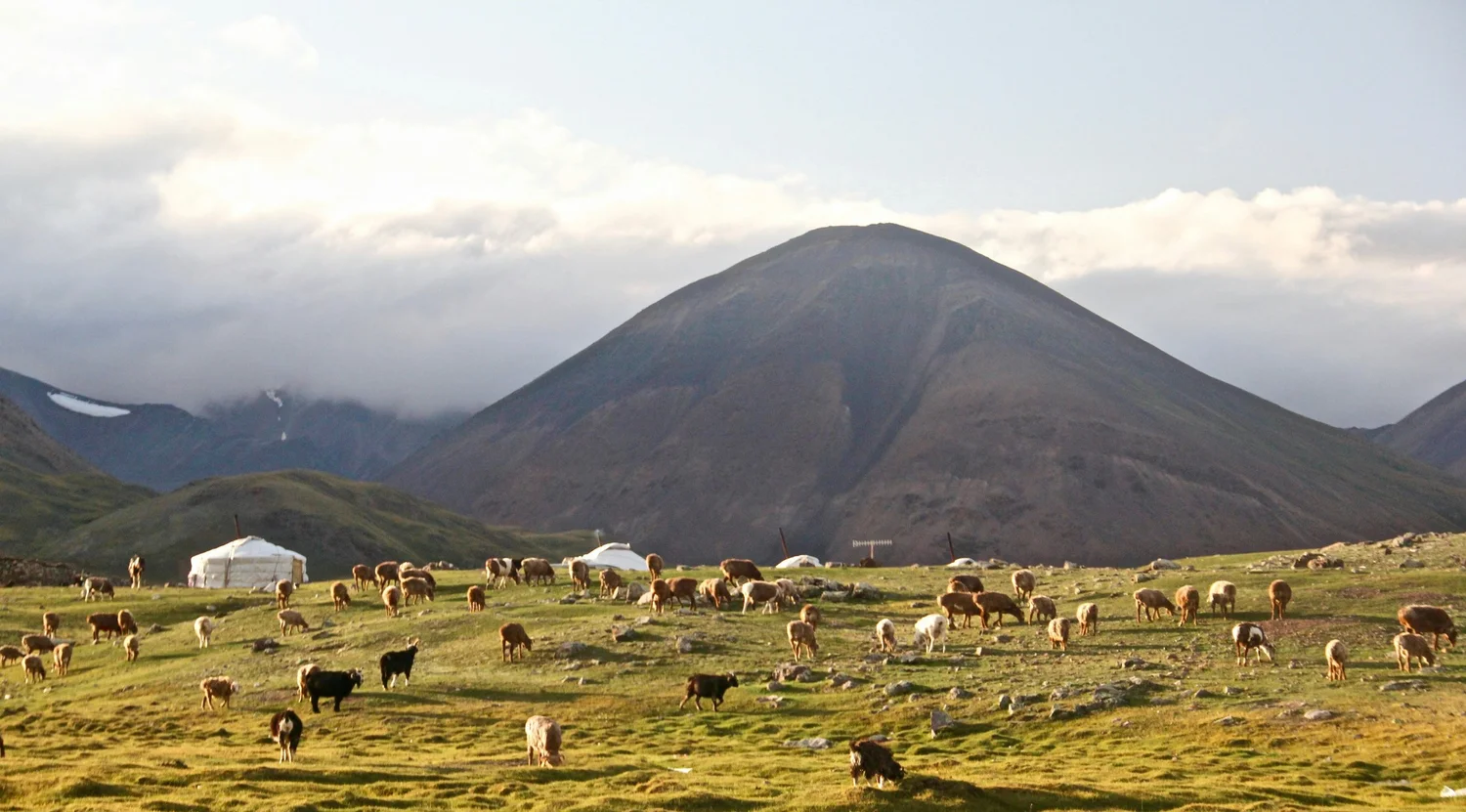
Rather than taking the main highway, Valley Tour uses the adventurous southern "backdoor" route through Uyanga — a high-altitude passage through volcanic highland meadows used almost exclusively by local herder families. The track climbs steeply through larch forests, crosses ridgelines with views back over the desert, and descends through meadows blooming with wildflowers in summer. The area is part of the ancient volcanic zone associated with the Khangai shield volcano system, and the landscape is studded with lava flows, basalt columns, and crater lakes.
Afternoon
The route descends dramatically to the Orkhon Waterfall (Ulaan Tsutgalan) — Mongolia's largest and most powerful waterfall, plunging 20 metres over a basalt cliff into a narrow gorge carved by the same volcanic activity that shaped the surrounding landscape. In early summer it runs with snowmelt and roars; by autumn the volume drops and the basalt formations around it are more clearly visible. The falls sit at the head of the Orkhon Valley, a UNESCO World Heritage Site recognised as a cultural landscape of outstanding significance — humans have farmed, grazed, and built empires in this valley for over three millennia.
Evening
As the light softens, join a local herder family for a 90-minute horseback ride along the valley floor — one of the most beautiful stretches of countryside in all of Mongolia. The valley is wide, green, and flanked by forest-covered slopes, threaded by the clear Orkhon River. Families setting up autumn camps are visible across the meadow, the white domes of their gers catching the last light. Dinner in camp by the river is accompanied by the sound of rushing water and the distant bells of free-roaming horses.
10
Tövkhön · Tsenkher
Monastery Cliff & Hot Springs Under Stars
Morning
A 3km hike through ancient larch forest leads up to Tövkhön Monastery — one of the most dramatically sited religious buildings in Central Asia, perched on a forested rocky outcrop at 2,600 metres. The monastery was founded in 1648 by Zanabazar, the remarkable polymath who served as Mongolia's first Buddhist leader (Jebtsundamba Khutuktu), and is also considered the country's greatest sculptor, poet, and linguist — the creator of the Soyombo script, which appears on the Mongolian flag. He used Tövkhön as a sanctuary and meditation retreat for over 30 years. The view from the terrace across the Khangai range — layer upon layer of forested ridges fading into blue haze — is among the most beautiful in Mongolia.
Afternoon
Descend and drive to Tsenkher Hot Springs — a geothermal field in the Khangai mountains where mineral-rich water emerges from the earth at temperatures between 38°C and 86°C, channelled into a series of open-air soaking pools set within a larch forest. The waters are rich in calcium, magnesium, and sulphur and are believed locally to have therapeutic properties for skin, joints, and circulation. After seven days of off-road driving, camping, and physical activity, this is restorative in the most literal sense.
Evening
The hot springs ger camp is Valley Tour's favourite overnight of the entire circuit. Dinner is served in the main tent, and afterwards guests typically drift back to the pools for a final soak under an enormous sky. With the Khangai mountains on all sides and the only light coming from the stars and the glow of the spring's steam, this is the tour's most contemplative and peaceful evening — a natural full stop before the final push back toward the ancient capital.
11
Kharkhorin · Ancient Capital
Erdene Zuu — Heart of the Mongol Empire
Morning
Drive to Kharkhorin (Karakorum) — the 13th-century capital of the Mongol Empire and arguably the most influential city in 13th-century world history. At the height of its power under Ögedei Khan, Karakorum hosted ambassadors from Europe, China, Persia, and Korea simultaneously and sat at the fulcrum of the Silk Road trade network. The 14th-century Moroccan traveller Ibn Battuta passed through; a Flemish friar named William of Rubruck wrote detailed accounts of its cosmopolitan streets. The city was razed by Ming Dynasty Chinese forces in 1388 and largely forgotten under shifting sands — the open fields beside the Orkhon River today give little hint of what once stood here.
Afternoon
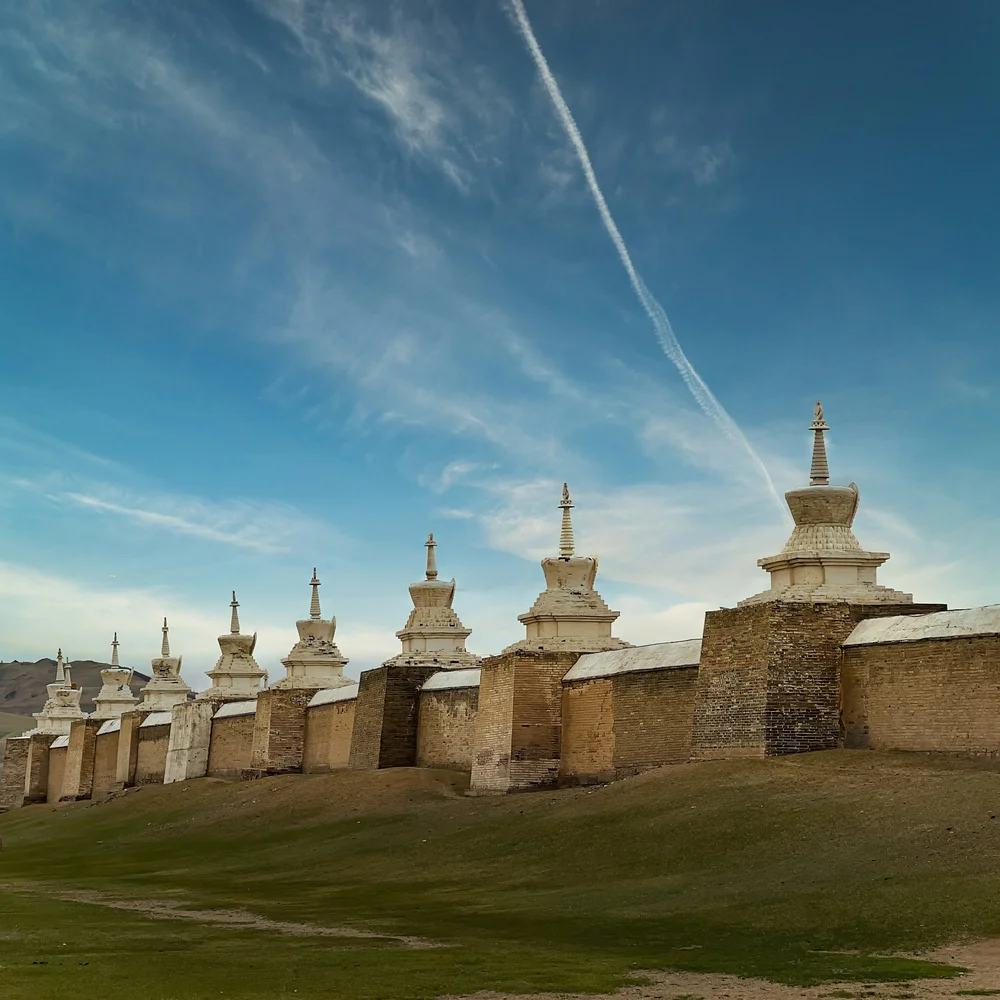
Mongolia's oldest surviving monastery, Erdene Zuu, was founded in 1586 by Abtai Sain Khan directly above the ruins of Karakorum, using stones salvaged from the palace walls as its foundations. The monastery complex is enclosed by a remarkable white wall studded with 108 stupas — 108 being the sacred number in Tibetan Buddhism. Three main temples survive: the Zuu of the Buddha (housing 16th-century gilt statues), the Dalai Lama Temple, and the Lavrin Temple, where butter lamps still burn before ancient thangka paintings. A small museum in the grounds holds artefacts from both the Mongol imperial period and the Buddhist era, including some of Zanabazar's own bronze sculptures.
Evening
A genuine nomadic homestay visit with a local herder family in the Orkhon Valley. Sit cross-legged in a working ger, accept a bowl of airag (fermented mare's milk — mildly alcoholic, sour, and acquired taste), try your hand at shagai (ankle-bone games played by Mongolian children for centuries), and hear through your guide the family's account of life on the steppe today — the balance between ancient rhythms and modern pressures, the realities of climate change on the pastures, and the deep pride in a culture that has never truly been conquered.
12
Khustai National Park
Takhi Wild Horses — The Last Wild Breed
Morning
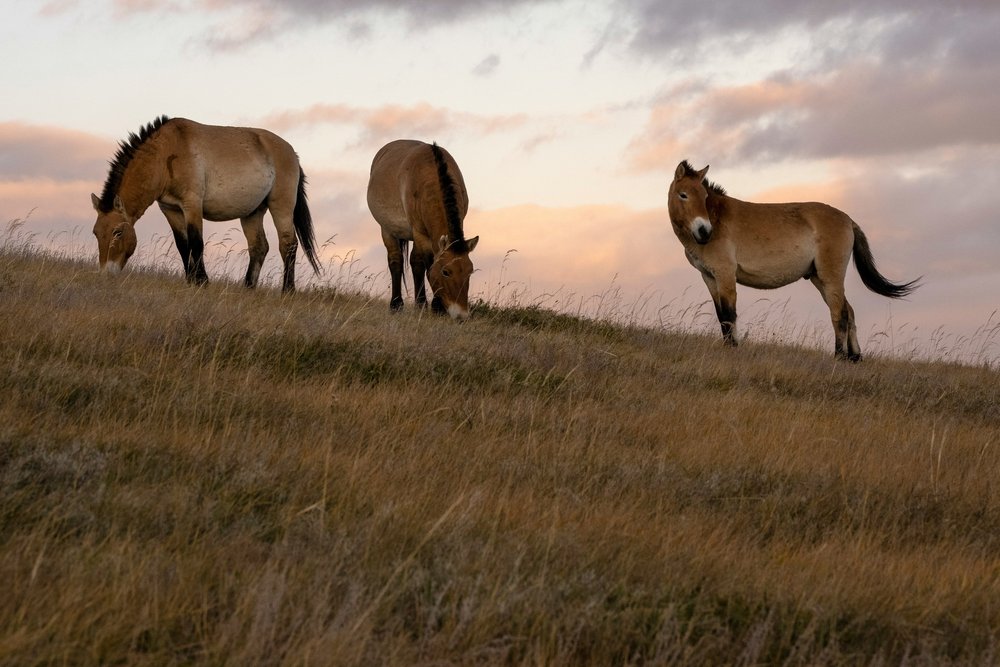
Drive east toward Khustai National Park — 50,000 hectares of steppe, saxaul forest, and river valley set aside specifically for the rewilding of the Przewalski horse (Takhi). The Takhi is the last genuinely wild horse on earth — distinct from feral mustangs or brumbies, which are descended from domestic animals. The species was declared extinct in the wild in 1969 after centuries of hunting and habitat loss. In 1994, 84 horses bred in European zoos were flown to Mongolia and released in Khustai. Today the population has grown to over 450, and the herds live entirely without human management. The drive to Khustai is itself beautiful — rolling country, big skies, the occasional red fox loping between scrub.
Afternoon
A ranger-guided wildlife tracking walk through the park's steppe valleys, using vehicle and foot to locate the Takhi herds. The horses roam freely across thousands of hectares, so sightings require patience and a degree of luck — but Khustai's rangers know the herds intimately and the success rate is high. The park also supports red deer, lynx, grey wolves, and over 200 bird species including the critically endangered Eastern imperial eagle. Your guide explains the reintroduction programme, the challenges of wolf predation, and the ongoing research conducted by international conservation teams in the park.
Evening
Position on a high ridge above the main valley for sunset. If the herds have been located nearby, this is the moment the day has been building toward: Przewalski horses silhouetted against the burning horizon, moving in their distinctive compact, stocky way across the open steppe — shorter and more muscular than domestic breeds, with a stiff upright mane and ancient, unmistakeable bearing. For many guests, seeing the Takhi is the emotional high point of the entire 13-day journey. Your last night under the stars.
13
Final Day
Chinggis Khaan Statue & Departure
Morning
A final stop before the city: the extraordinary Chinggis Khaan Equestrian Statue Complex at Tsonjin Boldog, 54km east of Ulaanbaatar on the banks of the Tuul River — the spot where legend holds that Chinggis Khaan found a golden whip, which he interpreted as a divine omen of his destiny. The statue itself is staggering: 40 metres of polished stainless steel, the largest equestrian statue in the world, visible from 20km away on a clear day. Take the lift inside the horse's body and climb to a viewing platform on the horse's neck for panoramic views across the Mongolian steppe. The complex also includes an excellent museum of Mongol imperial history and a full reconstruction of a 13th-century ger encampment.
Afternoon
Return to Ulaanbaatar. Time for last-minute shopping on your own: Cashmere House (gobi cashmere, the finest in the world), Naran Tuul (the city's famous open-air market, nicknamed the "Black Market," selling everything from saddles to Soviet-era binoculars), or the dedicated crafts shops along Peace Avenue. Mongolia's cashmere, felt goods, leather items, and hand-carved wooden crafts make for genuinely exceptional souvenirs.
Evening
Farewell dinner at a restaurant of your choosing in Ulaanbaatar — your guide will have recommendations from traditional to contemporary. Afterwards, a private vehicle transfer to Chinggis Khaan International Airport. Your guide stays with you through check-in to ensure a smooth send-off. After 13 days and nearly 2,000km across one of earth's last great wildernesses, you leave with the particular quiet satisfaction that only real travel delivers — the kind that takes time to process, that returns to you weeks later in dreams of open steppe and desert silence.
Food & Dining
Daily Meals

All meals are included during countryside days and are prepared by your dedicated camp cook using fresh local ingredients. Expect hearty, nourishing Mongolian food — heavy on mutton, dairy, and bread — with occasional surprises. Dietary requirements (vegetarian, gluten-free, allergies) can be accommodated with advance notice.

Day 1
Ulaanbaatar
Breakfast
Café breakfast
Included · café in Ulaanbaatar
Lunch
Welcome lunch
Included · local restaurant in Ulaanbaatar
Dinner
Welcome Feast
Modern Nomads restaurant · traditional Mongolian cuisine
Day 2
Baga Gazriin
Breakfast
Hotel breakfast
Buffet at hotel before departure
Lunch
Tsuivan
Hand-pulled noodles with mutton & vegetables
Dinner
Khorkhog
Mutton & vegetables slow-cooked with hot stones
Day 3
Tsagaan Suvarga
Breakfast
Ger camp breakfast
Fresh bread · eggs · suutei tsai (milk tea)
Lunch
Steppe picnic
Cold meats, bread & cheese roadside
Dinner
Guriltai shul
Hearty mutton noodle soup with herbs
Day 4
Yolyn Am
Breakfast
Ger camp breakfast
Aaruul (dried curd) · bread · jam · tea
Lunch
Canyon picnic
Served at the entrance to Yolyn Am
Dinner
Buuz
Steamed dumplings stuffed with mutton & onion
Day 5
Khongoryn Els
Breakfast
Ger camp breakfast
Tsampa porridge · fresh bread · eggs
Lunch
Dune camp lunch
Salad, bread & cold cuts at dunes base
Dinner
Tsuivan
Stir-fried noodles with mutton & bell pepper
Day 6
Khongoryn Oasis
Breakfast
Herder family breakfast
Airag (fermented mare's milk) · fresh yoghurt · bread
Lunch
Oasis riverside lunch
Light lunch by the Khongoryn River
Dinner
Bonfire BBQ
Grilled mutton & vegetables under the stars
Day 7
Bayanzag
Breakfast
Ger camp breakfast
Pancakes (gambir) · honey · butter · tea
Lunch
Fossil walk picnic
Sandwiches & fruit at the Flaming Cliffs
Dinner
Farm-to-table feast
Khorkhog · roasted root vegetables · local cheese
Day 8
Ongi Monastery
Breakfast
Ger camp breakfast
Eggs · fresh bread · suutei tsai
Lunch
Roadside picnic
En route to Ongi Monastery
Dinner
Shul (mutton soup)
Clear broth with root vegetables & hand-torn noodles
Day 9
Orkhon Valley
Breakfast
Ger camp breakfast
Oats · dried fruit · fresh bread · tea
Lunch
Waterfall picnic
Beside the Orkhon Waterfall
Dinner
Orkhon Valley feast
Tsuivan · salads · fresh dairy from valley herders
Day 10
Tsenkher
Breakfast
Ger camp breakfast
Fresh bread · clotted cream · berries · tea
Lunch
Forest picnic
After descending Tövkhön Monastery
Dinner
Hot springs dinner
Buuz · grilled vegetables · fresh sour cream
Day 11
Kharkhorin
Breakfast
Ger camp breakfast
Scrambled eggs · fried bread · jam · tea
Lunch
Kharkhorin local
Small local restaurant near Erdene Zuu
Dinner
Nomadic homestay
Airag · aaruul · dried meat · traditional dairy spread
Day 12
Khustai NP
Breakfast
Ger camp breakfast
Porridge · bread · boiled eggs · tea
Lunch
Park picnic
Sandwiches & fruit during the wildlife walk
Dinner
Final camp dinner
Khorkhog feast · fresh salad · Mongolian milk vodka (arkhi)
Day 13
Return to UB
Breakfast
Ger camp breakfast
Last breakfast on the steppe
Lunch
Lunch
Included · restaurant in Ulaanbaatar
Dinner
Farewell dinner
Included · restaurant in Ulaanbaatar · your choice
Preparation
What to Pack

Mongolia demands the layering system. A single day can swing from 30°C afternoon heat in the Gobi to near-freezing winds after dark. Pack light, pack layers, and expect dust in everything. Hard-shell suitcases are impractical — a soft duffel of 15–20kg maximum is strongly recommended.

⚠ Luggage note: When travelling by 4WD across rough terrain, space is limited. Oversized bags may not fit in vehicles. One soft duffel + one small daypack per person is the ideal setup.
Clothing
Thermal base layers × 2 (top & bottom)
Waterproof & windproof outer shell jacket
Down jacket (essential even in summer for evenings)
Lightweight fleece mid-layer
Broken-in ankle-support hiking boots
Quick-dry hiking trousers × 2
Long-sleeve shirts × 3 (sun protection + modesty)
T-shirts × 3
Warm hat, gloves & neck gaiter / buff
Wide-brimmed sun hat
Wool or merino socks × 4 pairs
Camp sandals or light shoes
Swimwear (for Tsenkher Hot Springs, Day 10)
Underwear × 5–7 (quick-dry preferred)
Health & Toiletries
High SPF sunscreen × 2 (UV is intense at altitude)
Insect repellent — DEET-based (ticks present in steppe)
Prescription medications + 5-day extra supply
Lip balm with SPF
Antihistamines (dust & pollen)
Imodium / rehydration sachets
Basic first aid kit (plasters, antiseptic, bandage)
Pain relief (ibuprofen / paracetamol)
Hand sanitiser & biodegradable wet wipes
Biodegradable soap & shampoo
Blister plasters (Compeed or similar)
Feminine hygiene products (limited rural access)
Altitude medication if prone to AMS (Khangai reaches 2,600m)
Small towel (microfibre preferred)
Gear & Tech
Headlamp + spare batteries
Power bank 10,000mAh+ (no power in remote camps)
Dust-proof camera bag or cover
Universal adapter (Type C / E sockets in Mongolia)
Dry bags or heavy-duty zip-lock bags (dust protection)
Camera + extra memory cards
Offline maps downloaded (Maps.me or OsmAnd)
Local SIM card (buy at Chinggis Khaan Airport on arrival)
Trekking poles (optional but useful for dune climb)
Sleeping bag liner (ger camps provide blankets but liners add warmth)
Earplugs & eye mask
Small padlock for luggage
Documents & Money
Passport (valid 6+ months beyond travel dates)
Travel insurance documents (mandatory)
Emergency contacts printed & saved offline
Visa printout (if applicable — check evisa.mn)
Copies of all documents — digital and physical
USD cash for tips, shopping & extras (ATMs scarce outside UB)
Debit / credit card (Visa accepted in Ulaanbaatar)
Daypack Essentials
Small daypack (20–25L) for daily excursions
1L water bottle (refillable — camps provide safe water)
Energy snacks (bars, nuts, dried fruit)
Sunglasses (UV400 minimum — Gobi light is brutal)
Rain cover for daypack
Lightweight packable windbreaker
Small notebook & pen
Binoculars (highly recommended for wildlife days)
Optional & Nice to Have
Gifts for nomadic families (sweets, school supplies, scarves)
Star chart or astronomy app for Khongoryn Els night
Field guide to Mongolian birds or mammals
Paperback book(s) for long drives
A few photos from home — nomadic families love to see them
Thermos flask (your cook will fill it with tea each morning)
Portable Bluetooth speaker for campfire evenings
Sand gaiters if serious about the dune climb

Starred items (★) are essential — do not leave without them.

Logistics
What's included
Included in your tour
  • All accommodation (hotel in UB + ger camps throughout)
  • All meals during countryside days (breakfast, lunch, dinner)
  • Private 4WD vehicle (UAZ Furgon or Toyota HiAce)
  • Expert English-speaking guide for all 13 days
  • Experienced local driver
  • All national park & monument entry fees
  • Nomadic family visit & cultural activities
  • Camel trek at Khongoryn Els
  • Airport & hotel pick-up and drop-off
Not included
  • International flights to/from Ulaanbaatar
  • Travel insurance (mandatory — must arrange your own)
  • Personal expenses & souvenirs
  • Tips & gratuities for guide and driver
  • Extra activities not listed in the itinerary
  • Alcoholic beverages
  • Visa fees (if applicable to your nationality)
Investment
Tour Pricing
Solo Traveller
$4,500
per person
Fully private. All services, private vehicle, and guide exclusively for you.
Small Group
$2,100
per person · 3–4 pax
Small group of 3 or 4. Still fully private — just your group, no strangers.
Group
$1,800
per person · 5–8 pax
Group of 5–8 people. Most economical rate. Private to your group.

All prices are in USD. A 50% deposit secures your dates; balance due 14 days before departure.
For custom dates, group sizes, or itinerary adjustments, contact us — we'll build a tailored quote.

Ready to go?

Your Mongolia
awaits

We respond within 24 hours. Tell us your dates, group size, and any special requests — we'll handle everything else.