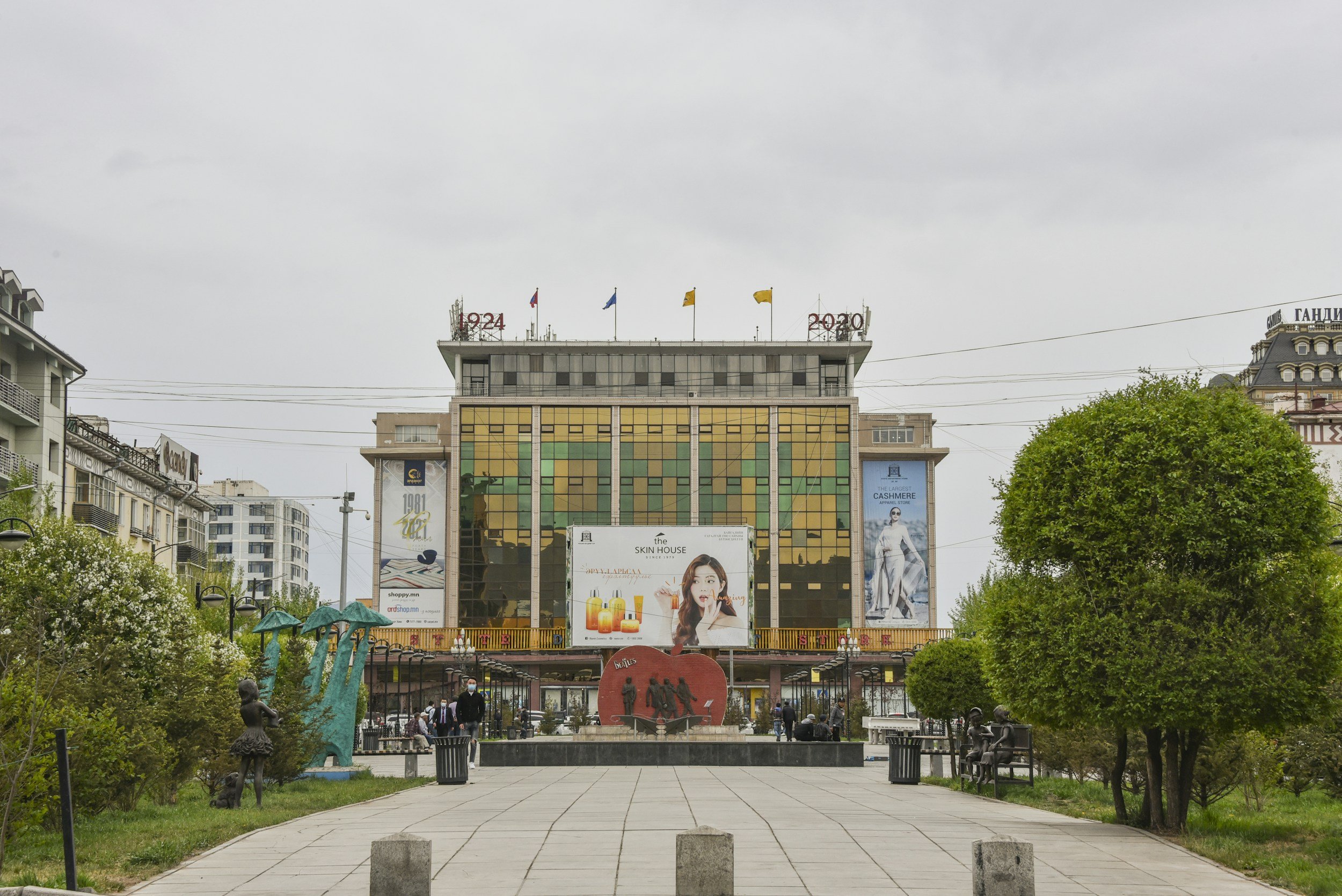
Modern Mongolia
Since 1990, Mongolia has undergone one of the most successful peaceful transitions in history—transforming from a socialist republic into a vibrant, multi-party democracy. Today, it stands as a unique bridge between its ancient nomadic soul and a fast-paced, high-tech global future.
The 1990 Democratic Revolution
In late 1989, inspired by the fall of the Berlin Wall, young Mongolians began organizing protests. The movement peaked in March 1990 when activists, including future leaders like Elbegdorj, launched a hunger strike in the bitter cold of Sukhbaatar Square.
The Peaceful Handover: Instead of using force, the Politburo of the Mongolian People's Revolutionary Party (MPRP) resigned en masse. This led to the first multi-party elections in July 1990.
The 1992 Constitution: This was the definitive turning point. It renamed the country from the "Mongolian People's Republic" to simply Mongolia, guaranteed freedom of speech and religion, and established a semi-presidential/parliamentary system.
Structure of the Modern Government
Mongolia’s government is designed to prevent the return of authoritarianism by splitting power between several branches.
The State Great Khural: A unicameral (one-house) parliament. It is the primary legislative body. As of recent reforms, it has expanded to 126 members to ensure better regional and proportional representation.
The President: Directly elected by the people, the President acts as the head of state and commander-in-chief of the armed forces, but has more limited domestic powers than the Prime Minister.
The Prime Minister: The head of government, typically the leader of the majority party in Parliament, responsible for the cabinet and daily administration.
The Economic "Shock Therapy" and Mining Boom
The 1990s were known as the "years of the transition." Mongolia moved from a planned economy (where the state owned everything) to a market economy overnight.
The Hardship Years: The sudden withdrawal of Soviet aid (which was 30% of the GDP) led to hyperinflation and food rationing in the early 90s.
The Resource Boom: In the 2000s, the discovery of massive mineral deposits transformed the nation.
Oyu Tolgoi: One of the world’s largest copper and gold mines, located in the South Gobi.
Tavan Tolgoi: One of the world’s largest untapped coking coal deposits.
The "Wolf Economy": For a period in 2011, Mongolia had the fastest-growing economy in the world (over 17% GDP growth).
The "Third Neighbor" Policy
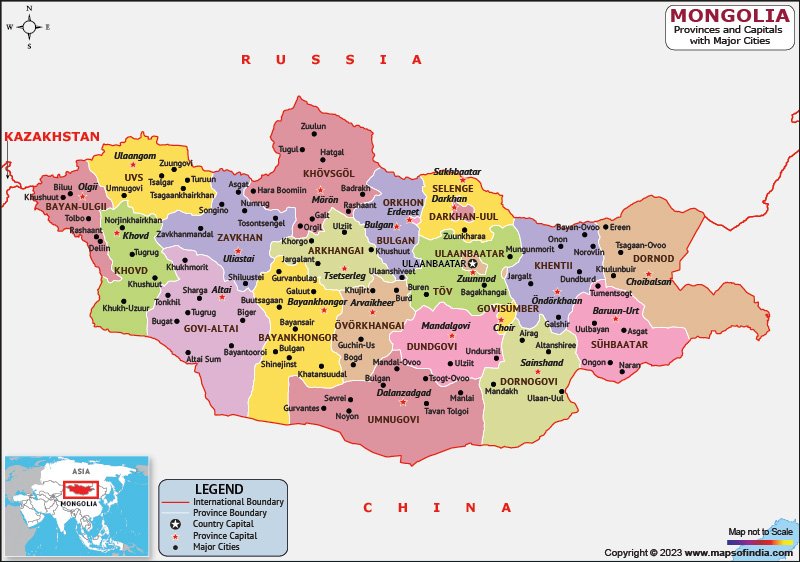
Geopolitically, Mongolia is in a unique position, landlocked between two superpowers: Russia and China. To maintain its sovereignty, it developed the Third Neighbor Policy.
The Concept: While maintaining good relations with its two "permanent neighbors," Mongolia seeks "third neighbors"—strategic partners like the United States, Japan, South Korea, Germany, and the European Union.
Global Participation: Despite its small population, Mongolia is a major contributor to UN Peacekeeping missions and has deployed troops to Iraq, Afghanistan, and South Sudan to prove its commitment to global security.
Social Dynamics: The Urban-Rural Divide
Modern Mongolia is a study in contrasts.
Ulaanbaatar (UB): A high-tech hub of over 1.6 million people. It features luxury high-rises, a booming tech scene, and a young population that is highly Westernized and English-speaking.
The Steppe: Outside the city, the nomadic tradition remains strong. However, modern herders now use motorcycles instead of horses to herd sheep, use solar panels for electricity, and watch satellite TV inside their gers.
Digital Nomads: Mongolia has recently launched a "Digital Nomad" visa, encouraging global remote workers to live in the countryside while connected to high-speed Starlink internet.
Current Challenges in 2026
While successful, modern Mongolia faces significant hurdles:
Air Pollution: In winter, the burning of raw coal in the "Ger Districts" of Ulaanbaatar creates some of the world's worst air quality, though the government is transitioning to refined fuel and electric heating.
Climate Change (The Dzud): Increasing frequency of "Dzuds"—extreme winters that follow dry summers—leads to massive livestock loss, forcing more nomads to migrate to the city.
Economic Diversification: The government is working to move away from being 90% dependent on mining exports by investing in Agriculture, Tourism, and Creative Industries (like "The HU" and Mongolian hip-hop).
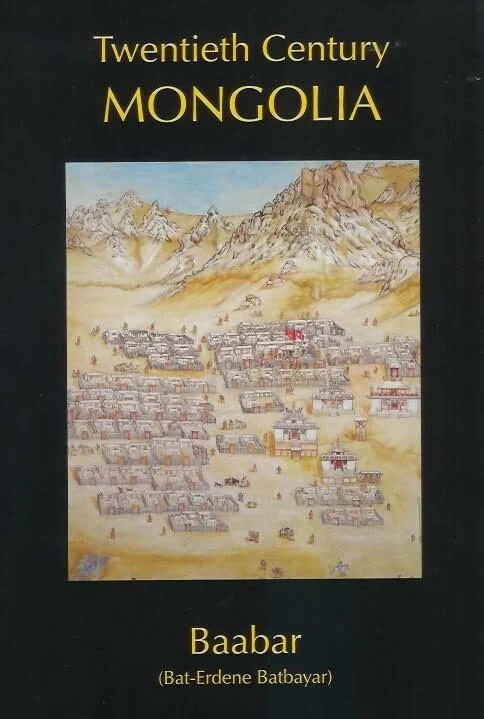
Twentieth Century Mongolia by Baabar (Bat-Erdene Batbayar) – the most thorough account of how Mongolia survived the 1900s. It covers the fall of the Qing, the Soviet era, and the rise of democracy.
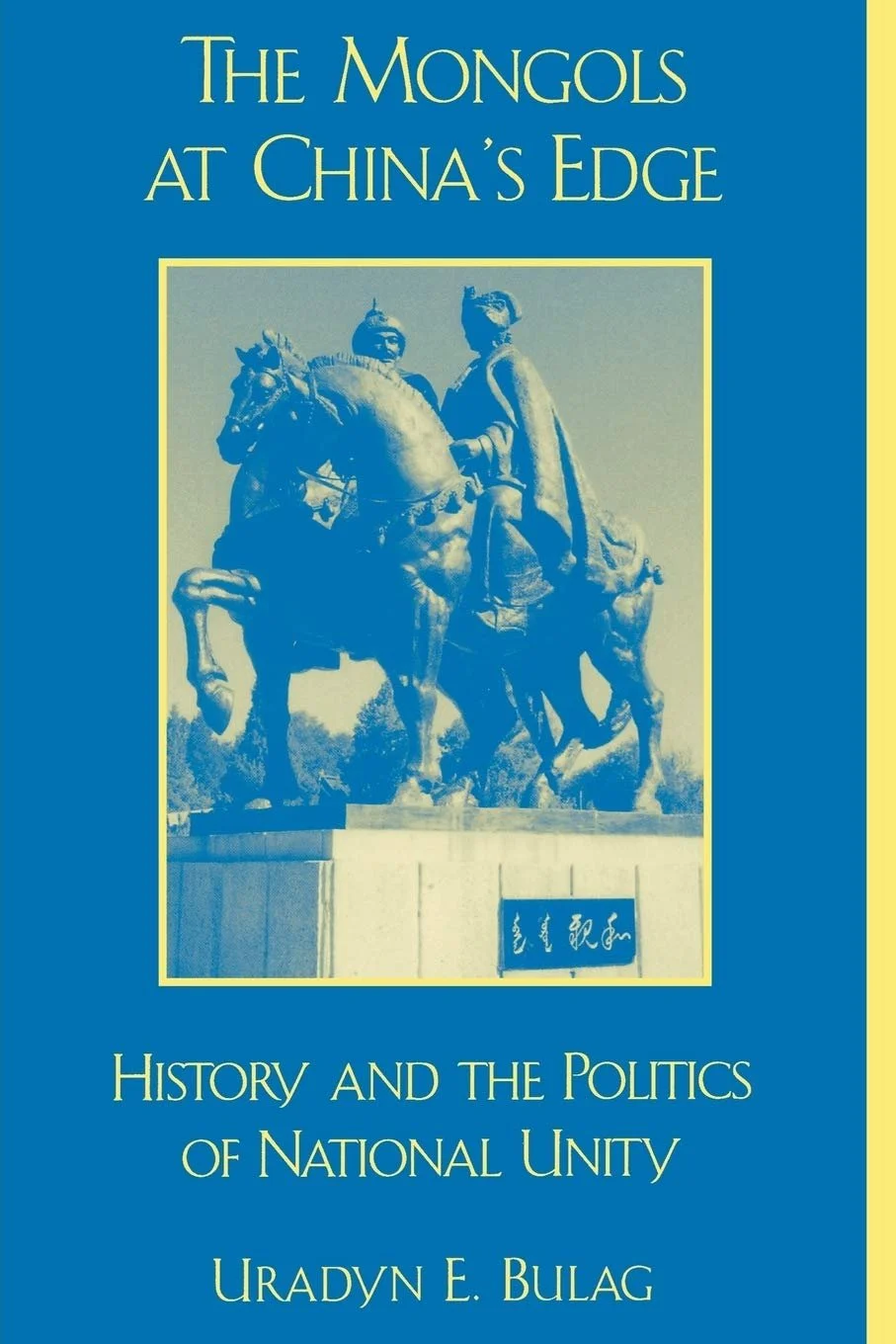
The Mongols at China's Edge by Uradyn E. Bulag – It explores the complex relationship between Inner and Outer Mongolia and how "being Mongolian" is defined in the modern world.
On the Trail of Genghis Khan by Tim Cope - Tim Cope traveled 6,000 miles by horse from Mongolia to Hungary over three years. It is the best book for understanding the true pace of life on the steppe and the hospitality of modern nomads.
