


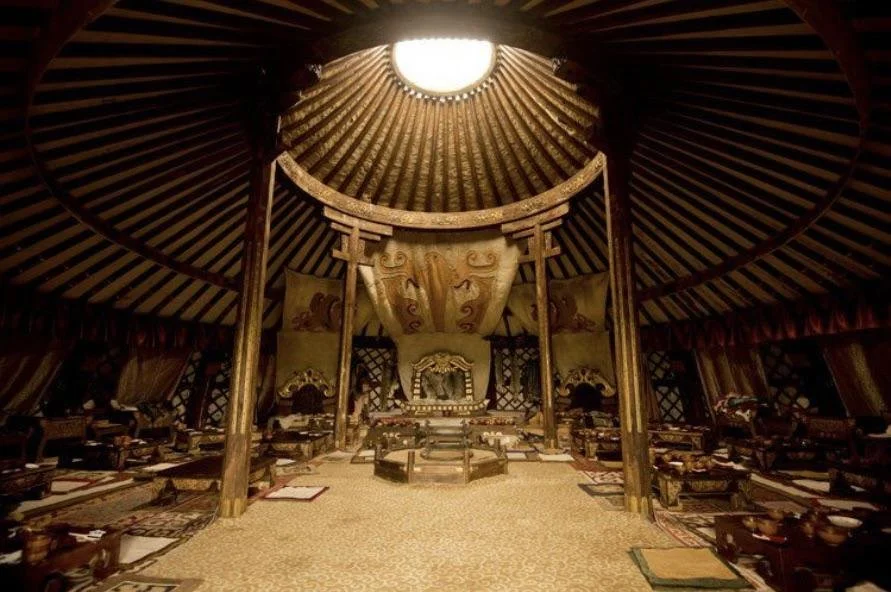
Khan's Custodian
6 Days / 5 Nights
For a solo tour = $2,000 per person
For a couple tour = $1,450 per person
For a group tour of 3-4 = $1,300 per person
For a group tour of 5-8 = $1,200 per person
For tour customization, feel free to contact and book a call with us by clicking on the button below:
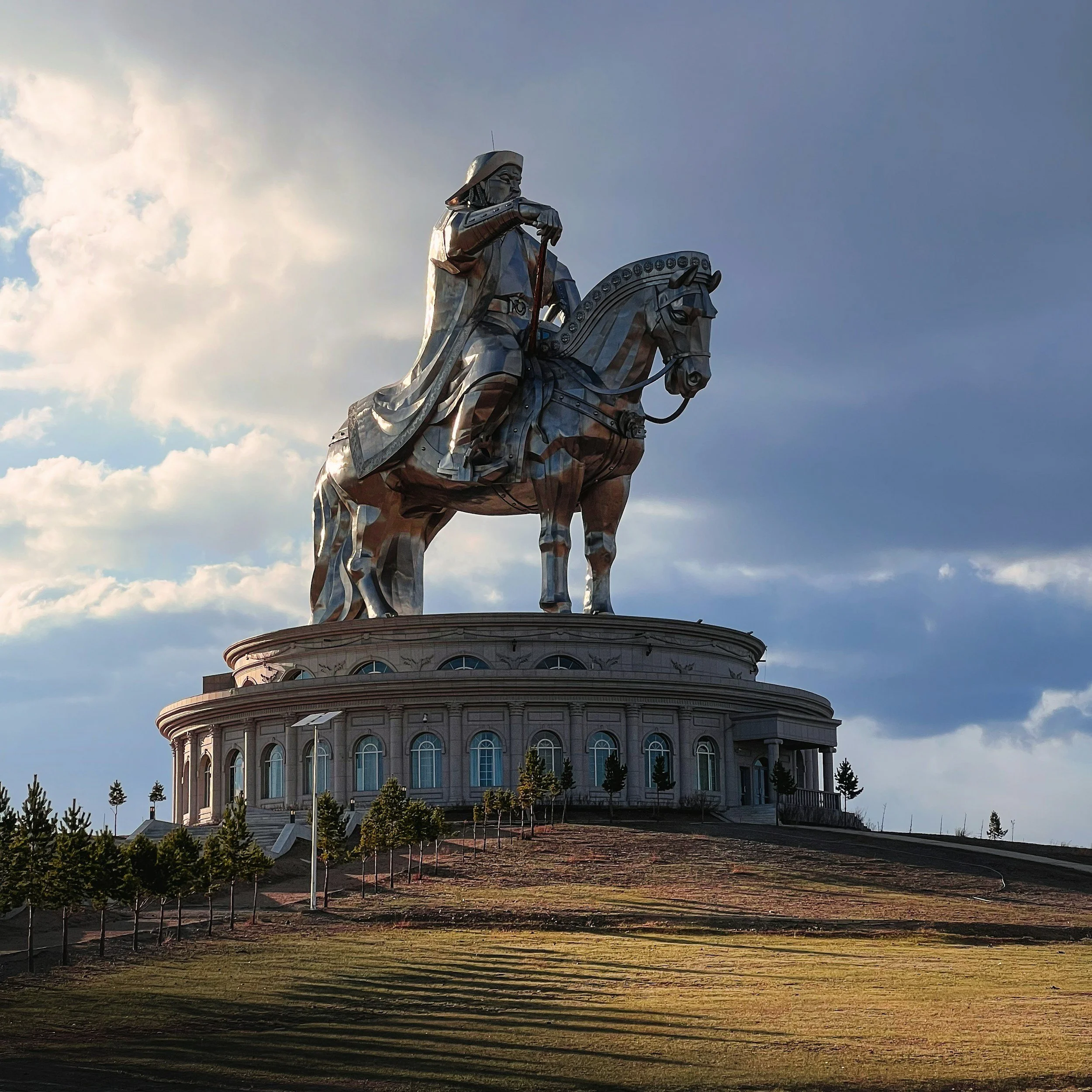
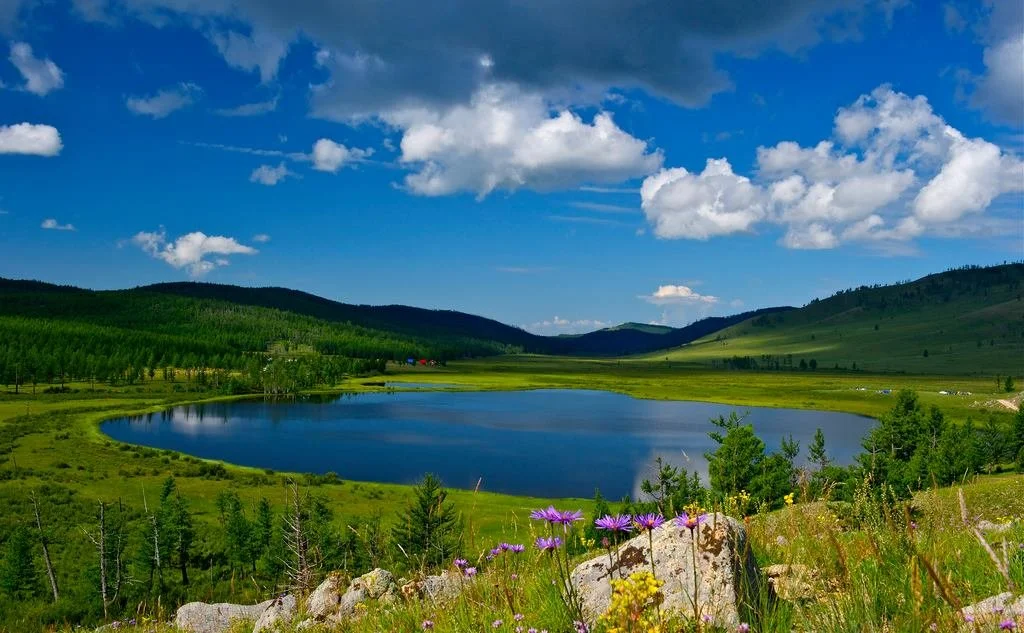
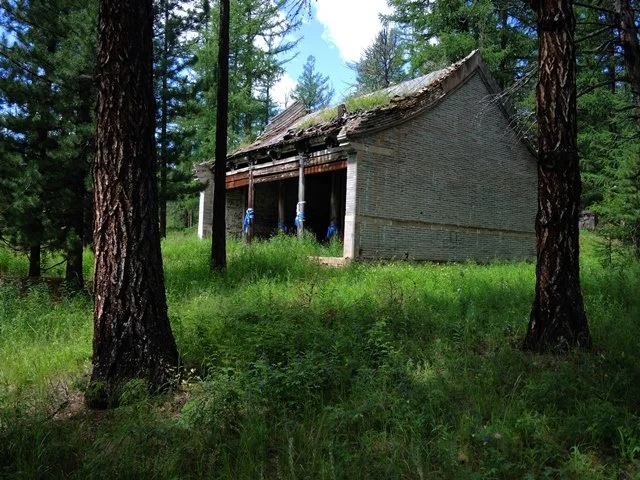
Journey through the emerald Khentii foothills to the very birthplace of an empire on this immersive historical expedition. Your adventure begins at the towering silver horseman of Tsonjin Boldog before heading deep into the forested mountains to Khar Zurkhnii Khukh Nuur. This sacred Blue Lake is where Temujin was crowned Genghis Khan in 1189 and today it remains a place of profound silence and history. You will navigate rugged tracks through larch forests to reach the secluded Princess Temple ruins which are tucked so far into the wilderness that they escaped the passage of centuries. From high ridges you will witness panoramic views of Burkhan Khaldun the legendary burial place of the Khan and a UNESCO World Heritage site.
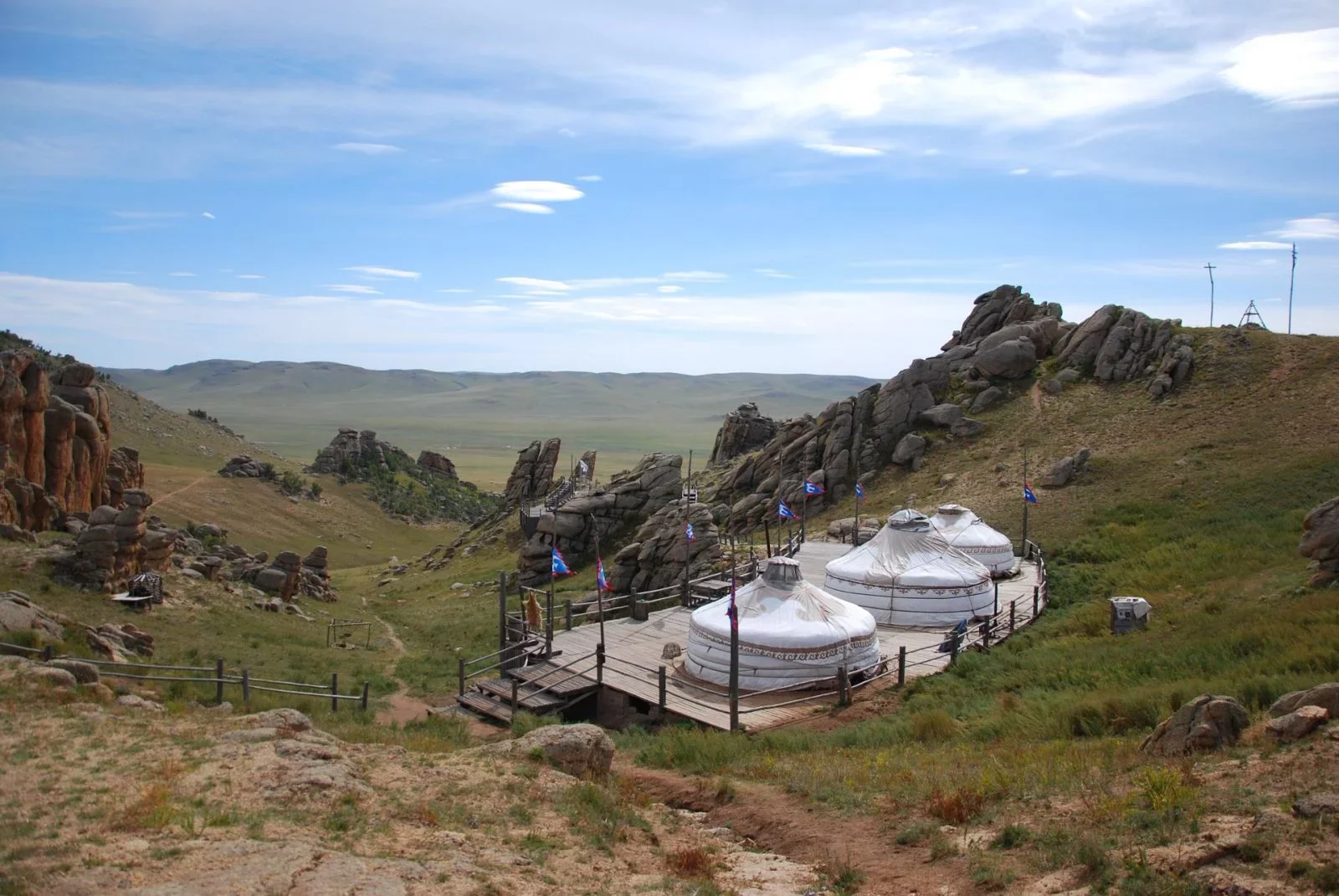
This itinerary is designed for those who want to master the ancient skills of the Great Steppe through hands on workshops and nomadic tasks. You will learn the mechanics of the Mongolian composite bow during ground and forest archery sessions focusing on the traditional thumb draw used by 13th century warriors. Engage directly with the nomadic way of life by assisting families with seasonal livestock counts and learning the art of crafting clotted Orom cream. Experience the unique thrill of a yak cart raft session in the wildflower carpets of Jalman Meadows and end your journey with a traditional Khorkhog feast cooked with fire heated river stones. This is more than a tour it is a deep dive into the craftsmanship and heritage that has defined Mongolia since the height of the empire.
TOUR HIGHLIGHT
Climb the world's tallest silver horseman.
Master the 13th-century warrior's bow.
Visit the site of the Khan’s coronation.
Hike to a hidden forest temple.
View the sacred Burkhan Khaldun range.
Experience traditional nomadic herding tasks.
DIFFICULTY LEVEL
ACTIVITIES





Itinerary
-
Depart Ulaanbaatar heading east on the paved Millennium Road. Stop at the Chinggis Khan Statue Complex (Tsonjin Boldog) to climb the 40-meter silver horseman. After lunch at the statue, continue driving east into the Khentii foothills. In the afternoon, settle into your camp and begin your first "Ground Archery" workshop. You will learn the mechanics of the Mongolian composite bow—focusing on the thumb-draw technique used by 13th-century warriors.
Meals: B: UB | L: Statue Restaurant | D: Mutton Buuz (Dumplings).
Accomm: Khentii Foothills Ger Camp.
-
Drive north toward the heart of the Khentii mountains to reach Khar Zurkhnii Khukh Nuur (The Blue Lake of the Black Heart). This is the historic site where Temujin was crowned Genghis Khan in 1189. Spend the afternoon exploring the 36 wood-carved statues of the royal lineage circling the shore. Participate in a "Nomadic Heritage" task: assisting a local family with the seasonal livestock census, counting the year's new foals and calves.
Meals: B: Camp | L: Lakeside Picnic | D: Tsuivan (Stir-fry Noodles).
Accomm: Khukh Nuur Lakeside Ger Camp.
-
Today the pavement is a memory. Using a rugged 4WD track, head northwest through the Baruun Bayan valley. This route cuts through dense larch forests and crosses the upper Tuul River tributaries. Set up a vehicle-supported wilderness camp in a clearing and practice "Forest Archery," aiming at targets placed among the trees to simulate traditional hunting conditions in the thick taiga.
Meals: B: Camp | L: Trail Rations | D: Campfire Mutton Stew.
Accomm: Wilderness Tents (Riverside).
-
Drive to the "road's end" near the Gunjiin Sum ruins (The Princess Temple). Built in 1740, this Manchurian-style tomb is tucked so deep in the forest that it survived the religious purges. Since the final 5km can be boggy, you will hike or take a short horse-ride to explore the stone walls and the Bogd Gate. In the evening, assist your host family with a Nomadic Dairy Task: learning to boil fresh milk to create Orom (thick clotted cream).
Meals: B: Tent | L: Forest Picnic | D: Orom, Bread & Tea.
Accomm: Wilderness Tents (Monastery Valley).
-
Continue your westward traverse along the high ridges. From these vantage points, you'll have a panoramic view of the Burkhan Khaldun mountain range—the legendary burial place of the Khan and a UNESCO World Heritage site. Engage in an active herding task: helping local horsemen move a "Uurga" (catching pole) through the herd to select specific horses for the next day's rotation.
Meals: B: Tent | L: Ridge-top Picnic | D: Beef Noodle Soup.
Accomm: Wilderness Tents (High Pasture).
-
Arrive at the Jalman Meadows, a wide-open valley where the Khentii forest meets the Mongolian steppe. This "Upper Tuul" region is famous for its wildflower carpets. Spend the afternoon on a final horse ride or a "Yak Cart Raft" session down the river. End the adventure with a traditional Khorkhog—a farewell feast of mutton and vegetables cooked with white-hot river stones inside a sealed pot.
Meals: B: Tent | L: Meadows Picnic | D: Traditional Khorkhog.
Accomm: Jalman Meadows Luxury Ger Camp.
-
Spend a quiet morning participating in a final nomadic workshop: archery from a slow-moving horse (optional/assisted). After a final farewell to your hosts, follow the Tuul River valley downstream. This route connects directly back to the main Terelj road, completing the loop. Arrive in Ulaanbaatar by mid-afternoon for a celebratory farewell banquet.
Meals: B: Camp | L: Roadside BBQ | D: UB Farewell Banquet.
Extra Information
-
Reservation & Deposit
Deposit: To secure a spot on on this tour, a 50% non-refundable deposit of the total tour cost is required at the time of booking.
Final Payment: The remaining 50% balance must be paid in full at least 14 days before the tour start date. For last-minute bookings (within 30 days of departure), full payment is required immediately.
Payment Methods: We accept bank transfers (SWIFT/Wise) and Paypal.
2. Travel Insurance (Mandatory)
Mongolia is a land of adventure, and the nomadic lifestyle involves remote areas. Comprehensive travel insurance is a mandatory requirement for all participants. * Coverage: Your policy must cover emergency medical evacuation, trip cancellation, and personal injury.
Adventure Activities: Ensure your insurance specifically covers horseback riding, as some standard policies exclude this.
Proof of Insurance: We require a digital copy of your insurance certificate before the tour begins.
3. Cancellation & Refunds
We understand that plans change. Our refund policy for the remaining balance is as follows:
31+ days before departure: 100% of the balance is refunded (minus the non-refundable deposit).
15–30 days before departure: 50% of the total tour cost is refunded.
Less than 14 days before departure: No refund is available.
4. Nomadic Stay Etiquette & Logistics
Facilities: Living with a nomadic family is a raw, authentic experience. Please note that guest Gers usually use traditional "pit latrines" and have limited electricity (solar-powered for lights).
Health & Diet: Please inform us of any allergies or dietary restrictions (e.g., vegetarian) at least 14 days in advance. Nomadic diets are heavily meat and dairy-based.
Passport: Your passport must be valid for at least 6 months beyond your date of arrival in Mongolia.
-
1. The Hydration Strategy
Don't wait for thirst: In the Gobi’s dry air, sweat evaporates instantly. You are losing water even if you don't feel "sweaty." Drink small sips of water every 20 minutes.
Electrolytes are key: Water alone isn't enough when you're traveling for 10 days. Bring electrolyte tablets or powders to add to your water bottle once a day to prevent "travel fatigue" and headaches.
The "Pee Test": If your urine is dark, you’re in the danger zone. It should be pale yellow.
2. Mastering the Dust & Sand
The "Gobi Mask": When driving off-road or climbing the dunes, a Buff or bandana is your best friend. It keeps the fine silt out of your lungs.
Ziploc Everything: The Gobi dust is microscopic and can ruin expensive cameras and phones. Keep all electronics in sealed Ziploc bags when not in use.
Glasses vs. Contacts: For those who wear contact lenses, bring back-up glasses. The dust and wind can make contacts extremely irritating.
3. Beating the Midday Heat
The Siesta: We schedule our biggest climbs (like the Singing Sands) for sunrise or sunset. Between 1:00 PM and 4:00 PM, the best survival strategy is to stay in the shade of a Ger, drink tea, and nap.
Loose & Long: It seems counterintuitive, but long-sleeved cotton or linen shirts are cooler than tank tops. They create a personal "shade" for your skin and prevent sunstroke.
4. Motion Sickness & The Bumpy Road
The Gobi "Massage": Mongolian drivers call the bumpy off-road tracks a "Gobi Massage." If you are prone to car sickness, you should sit in the front passenger seat and bring ginger tablets or motion-sickness bands.
Look at the Horizon: Look out at the vast horizon rather than reading a book or looking at a phone while the vehicle is moving.
5. Nighttime Surprises
The Temperature Drop: The Gobi can drop from 30°C at noon to 10°C at midnight. Always keep a fleece or light down jacket at the top of your bag, even if the day feels boiling hot.
Scorpions & Critters: While rare, it’s a desert. Rule #1: Never leave your shoes outside the Ger. Always bring them inside and give them a quick shake before putting them on in the morning.
-
1. The Layering System (Extreme Range)
The "Gobi" Base: 5–7 lightweight, light-colored T-shirts. Long-sleeved "sun shirts" with UPF protection are highly recommended for the desert to prevent burns.
The "North" Base: 2 sets of high-quality thermal tops and bottoms (merino wool). You will wear these to sleep in the North and as a base layer on windy days.
Mid-Layers:
1 medium fleece jacket.
1 lightweight "down sweater" or packable puffer jacket (essential for Khuvsgul).
Outer Shell: A 100% waterproof and windproof rain jacket. In the North, the rain can be sustained and cold.
Bottoms:
2 pairs of quick-dry hiking trousers (zip-offs are best).
1 pair of shorts (strictly for the Gobi).
1 pair of comfortable "camp pants" (sweatpants or leggings) for evenings in the Ger.
2. Footwear (The "All-Terrain" Kit)
Mid-Weight Hiking Boots: Waterproof and ankle-supportive. Essential for the rocky Yolyn Am ice field and the muddy trails around Lake Khuvsgul.
Sport Sandals (Tevas/Chacos): Essential for the Gobi (sand gets everywhere in boots) and for wading into the lakes.
Shower Flip-Flops: A must for communal Ger camp showers.
Socks: 6–8 pairs. A mix of thin "liner" socks for the heat and thick wool socks for the North.
3. Specialized Gear for 18 Days
The Bag: Soft-sided duffel only. You will be moving your bag in and out of a 4x4 daily for nearly three weeks; hard suitcases frequently break or don't fit the tetris-style packing of the vehicles.
Daypack (25-30L): Must be comfortable for 4-hour hikes and have a rain cover.
Sleeping Bag Liner: Silk or fleece. While Ger camps provide bedding, a liner adds warmth in the North and hygiene in more remote homestays.
Dry Bags / Packing Cubes: These are not optional for the circuit. They protect your clean clothes from the fine Gobi dust and the humidity of the North.
High-Capacity Power Bank: 20,000mAh minimum. You will have long stretches (2–3 days) without reliable power.
4. Health, Hygiene & Protection
Sun & Dust Protection:
Polarized sunglasses (the glare on the sand and the lake is blinding).
Wide-brimmed hat with a chin strap (the wind will steal a normal cap).
2 Buffs/Bandanas: One for dust (Gobi) and one for warmth/sweat (North).
Hygiene:
3 large packs of biodegradable wet wipes (your "Gobi Shower").
Microfiber travel towel (fast-drying is key).
Hand sanitizer (use before every meal).
Medical Kit:
Rehydration salts (Electrolytes) are vital for the Gobi heat.
Anti-diarrheals and broad-spectrum antibiotics.
Insect repellent (The North has "Gobi flies" and mosquitoes near the water).
5. Cultural Gifts (Regional Nuance)
For the Gobi (Camel Herders): Useful items like pocket knives, high-quality flashlights, or protective work gloves.
For the North (Reindeer/Tsaatan People): Practical items like sewing kits, solar-powered lamps, or warm socks.
For Children: Stickers, coloring books, and colored pencils are always a hit. (Avoid candy/sugar due to limited dental access).
-
Mongolian nomads are world-famous for their hospitality, but their homes are considered sacred spaces. Following these simple customs will show your hosts that you respect their way of life.
Entering the Ger
The Threshold: Never step on the wooden threshold of the door; it is considered the "neck" of the home. Always step over it with your right foot first.
Don’t Knock: Traditionally, Mongolians don't knock. Instead, call out "Nokhoi khor" (literally: "hold the dog") to announce your arrival.
The Support Pillars: Never lean against or walk between the two central support pillars. These represent the stability of the family and the connection between heaven and earth.
Direction: Once inside, move in a clockwise direction. Guests are typically seated on the left (west) side of the Ger.
Food & Drink Rituals
The "Taste Test": If you are offered milk tea or a snack, always accept it with your right hand. Even if you aren't hungry, take a small sip or a tiny bite before putting it down. Refusing outright is considered impolite.
Right Hand Only: Always give and receive items (especially food, tea, or gifts) with your right hand. For extra respect, support your right elbow with your left hand.
Fire is Sacred: Never throw trash, water, or food scraps into the central stove. Fire is the most sacred element of the home.
General "Dos and Don'ts"
Feet Placement: When sitting, never point the soles of your feet toward the altar (at the back of the Ger) or toward other people. It’s best to sit cross-legged or tuck your feet under you.
Hats: Mongolians value the head as the most sacred part of the body. Never touch another person’s hat, and if you take yours off, place it in a high spot (like on a bed or a shelf) rather than on the floor.
Step on a Foot: If you accidentally step on someone's foot, immediately shake their hand. It’s the local way of saying "I didn't mean any harm."
Whistling: Avoid whistling inside the Ger; locals believe it "calls the wind" or brings bad luck to the household.