

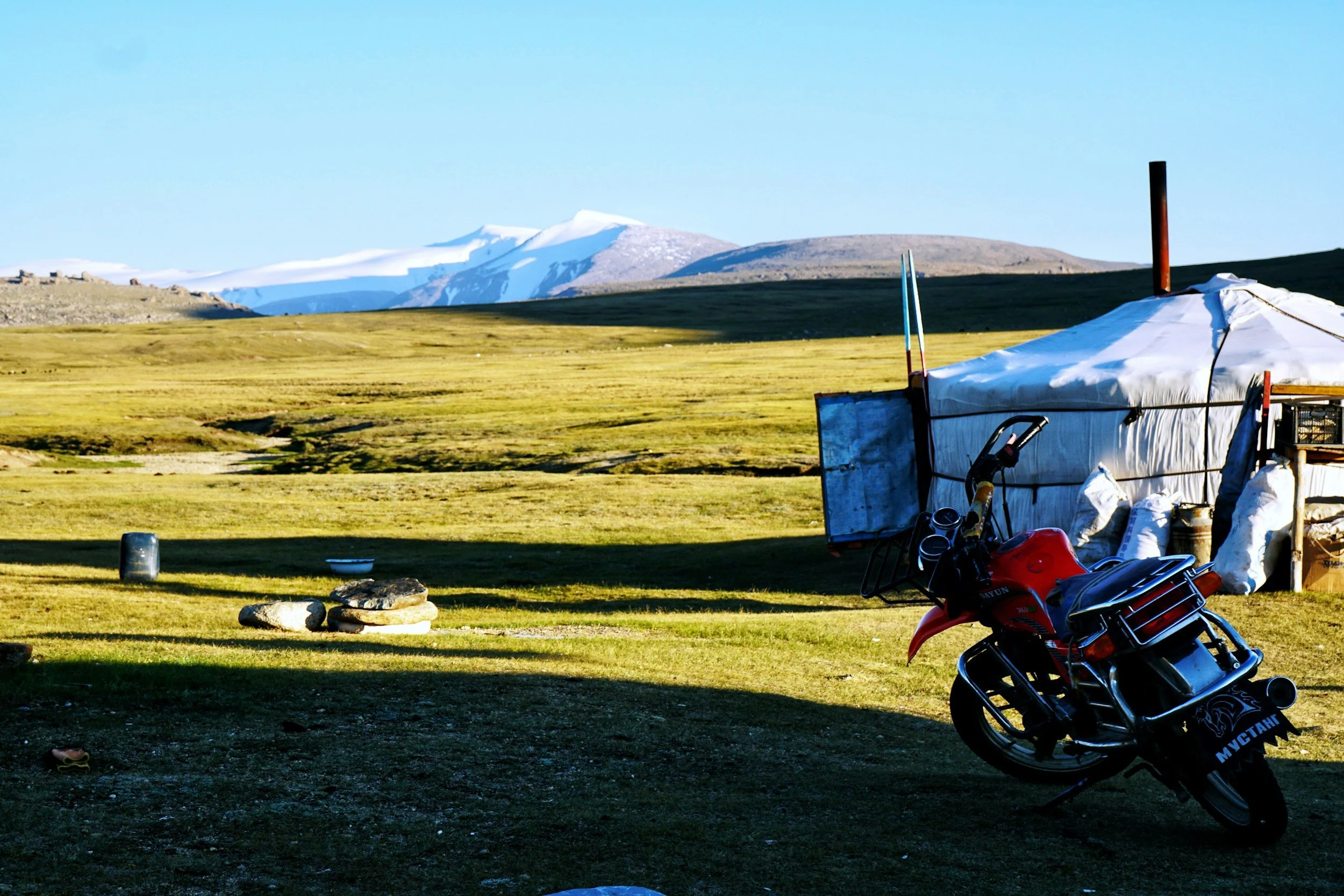
The Nomadic Way of Life: Harmony on the Move
"A Mongolian is born in a Ger and dies on the Steppe." This ancient proverb captures the essence of a lifestyle that has remained fundamentally unchanged for millennia. It is a life defined by complete mobility, deep familial bonds, and a profound respect for the "Eternal Blue Sky."
The Architecture of Freedom: The Ger
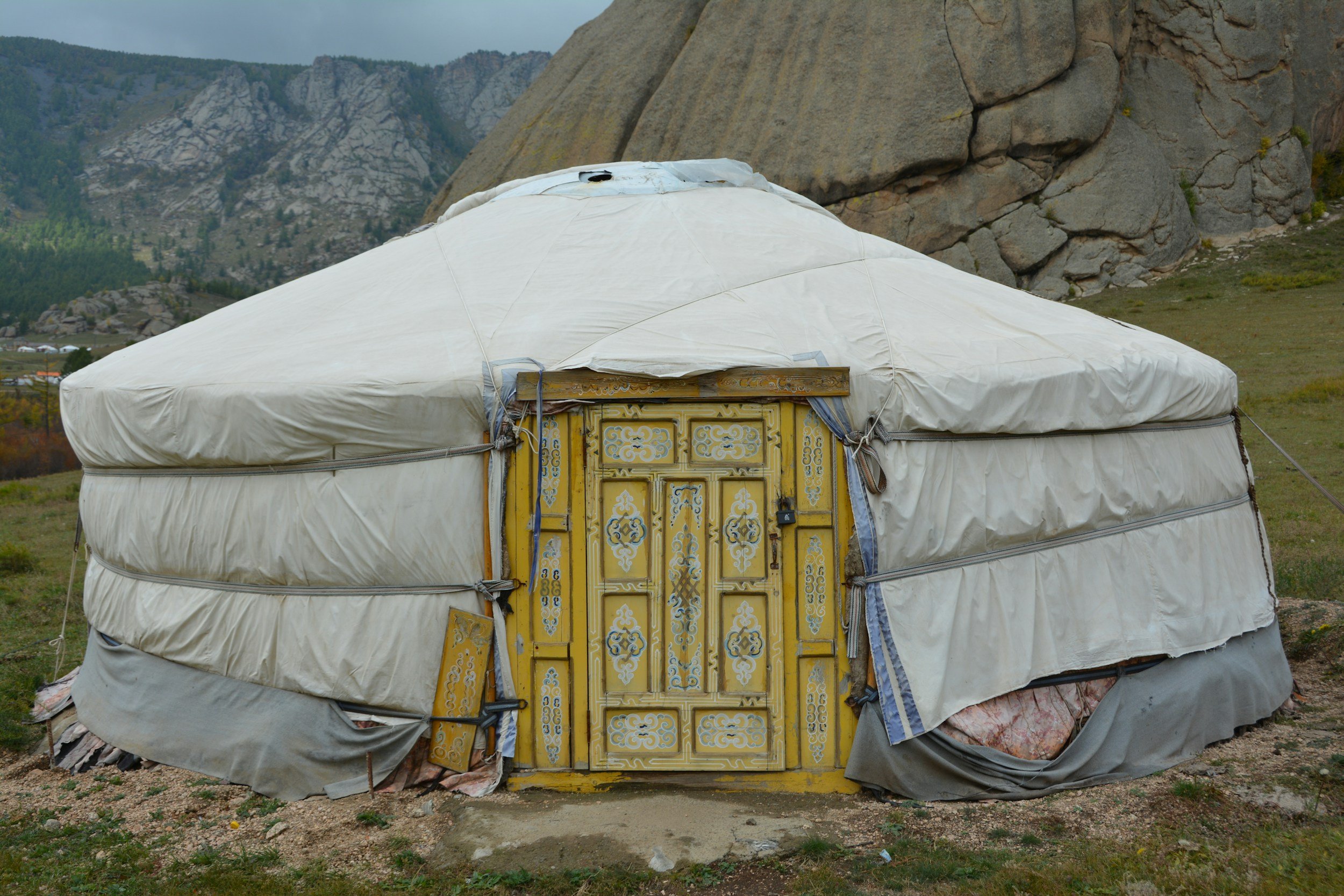
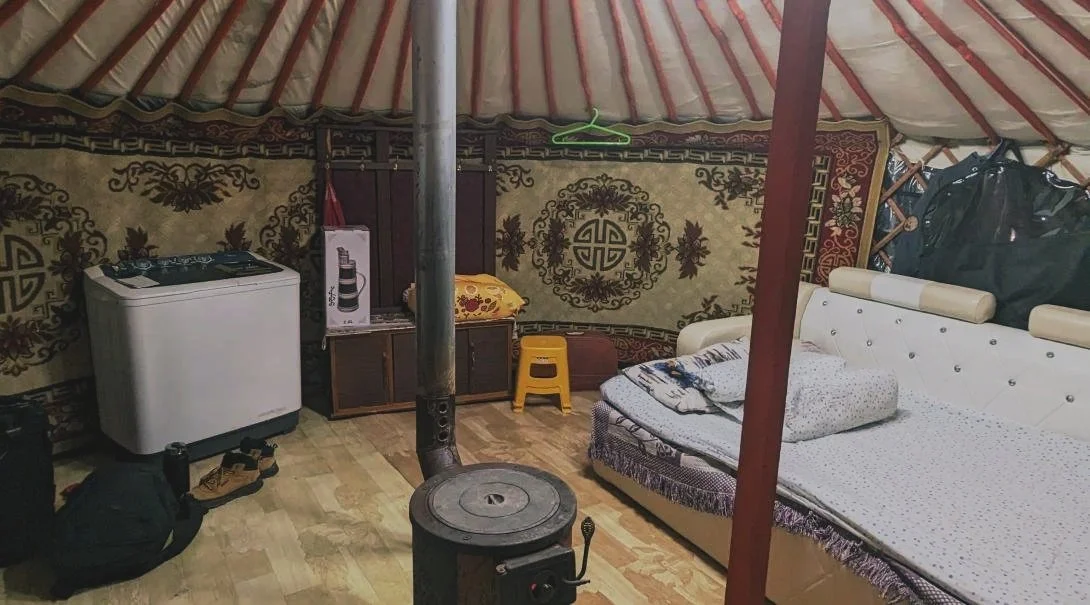
The Mongolian Ger (Yurt) is one of the world's most ingenious pieces of architecture. It is designed to be assembled or disassembled in less than an hour, making it the perfect home for a life on the move.
The Toono (Crown): The circular window at the top that represents the connection to the sky and serves as a sundial.
The Hana (Lattice): The expandable wooden walls that provide flexibility and strength against the fierce steppe winds.
The Felt: Made from sheep’s wool, the thick felt layers provide natural insulation that keeps the interior cool in the summer and warm in temperatures as low as -40°C.
The Four Seasons of Migration
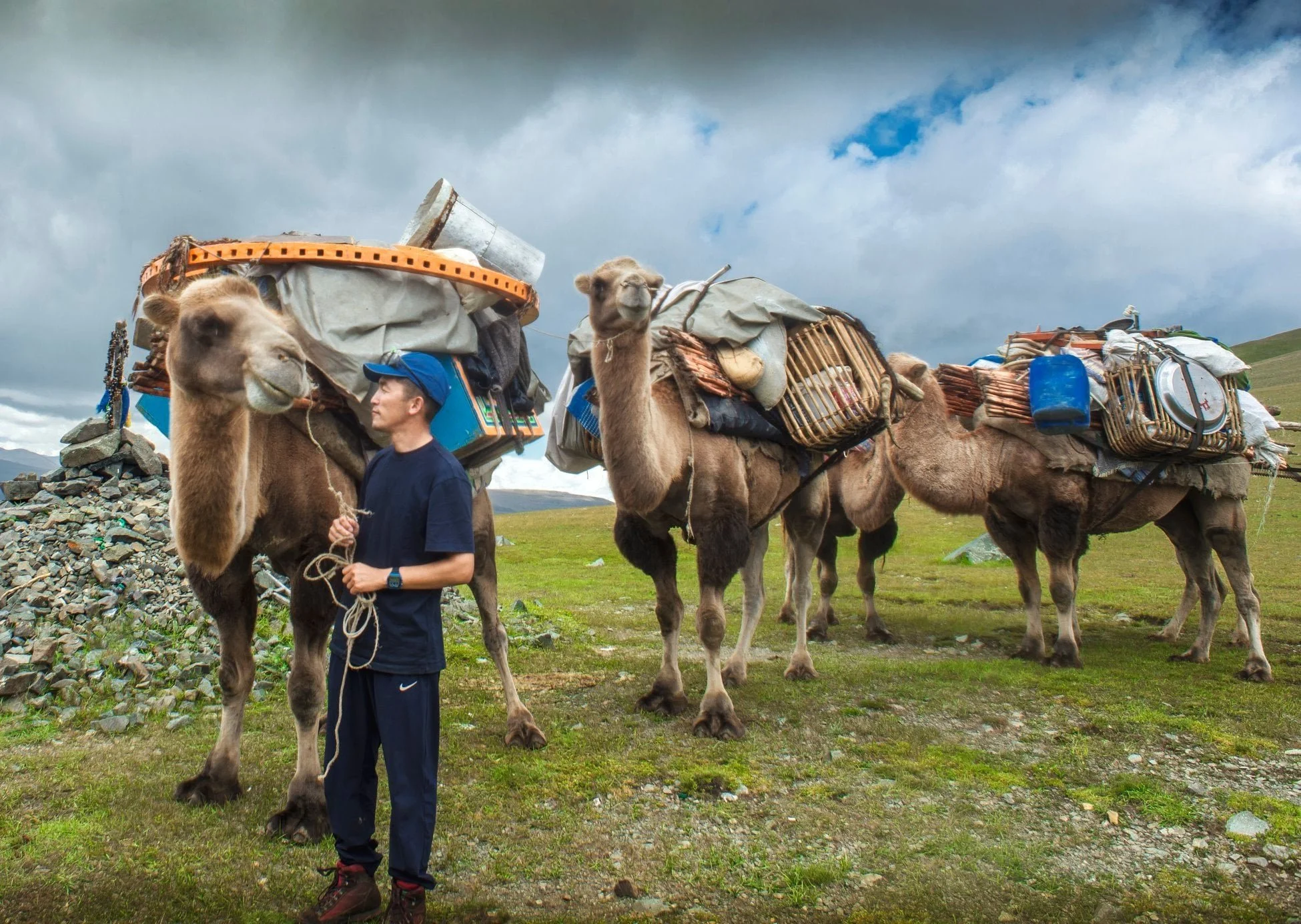
Nomadic life is a constant conversation with the environment. Depending on the region and the weather, families move their entire households at least four times a year to find the best grazing land for their animals.
Spring (Urtuu): A critical time for the survival of newborn livestock; camps are usually located in sheltered areas.
Summer (Zuslan): The season of abundance. Camps are moved to wide-open pastures near water sources to fatten the herds.
Autumn (Namarjaa): A time of preparation. Families move to harvest hay and prepare dairy products for the long winter.
Winter (Övöljöö): The most challenging season. Camps are tucked into mountain valleys or behind stone walls to block the freezing winds.
The Five Muzzles: The Nomadic Economy
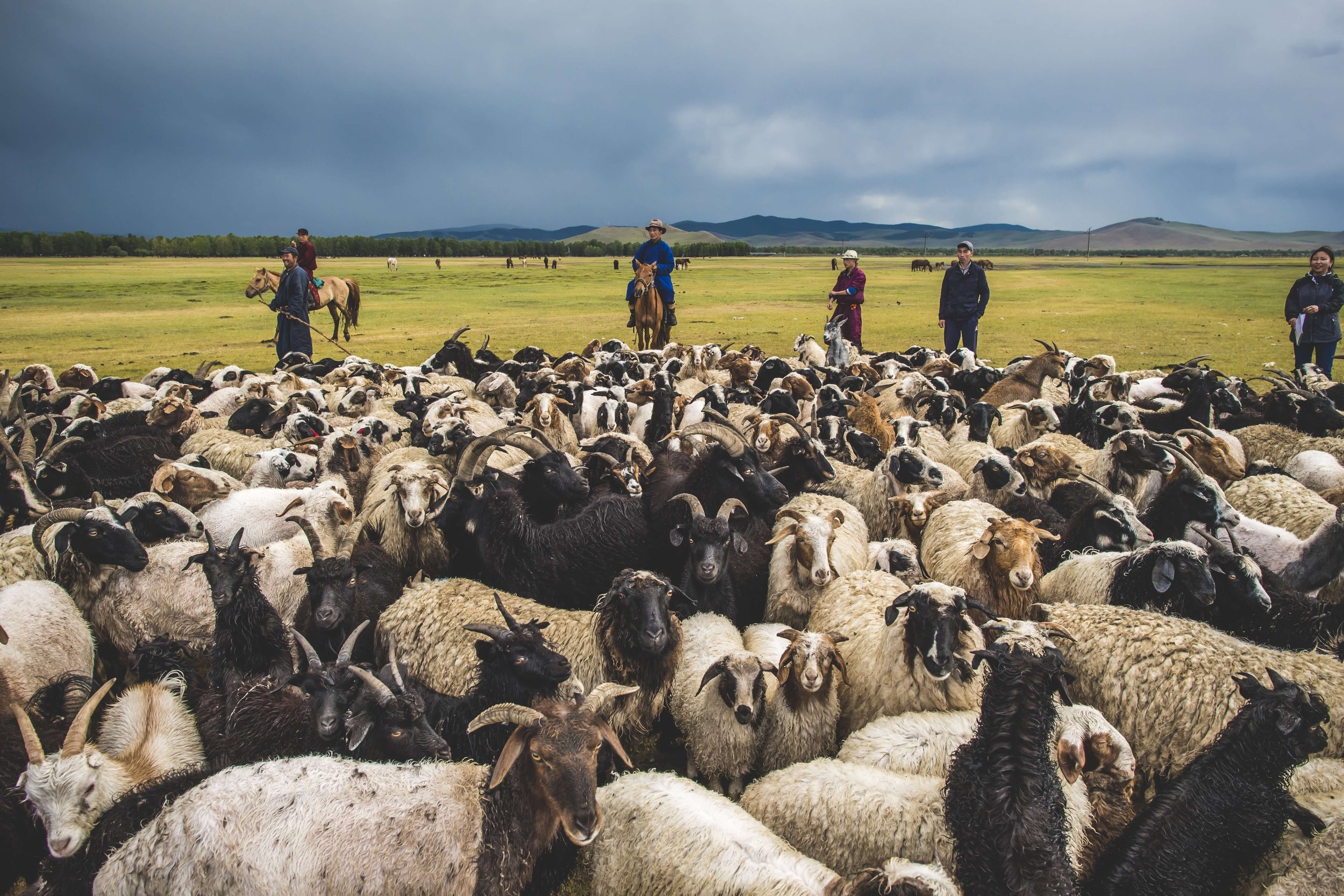
The survival of a nomadic family depends on the "Taban Khushuu Mal" or the Five Muzzles. Each animal provides a specific necessity for life:
Horses: For transport, prestige, and the sacred Airag (fermented milk).
Sheep: The primary source of food (mutton) and wool for felt.
Goats: Highly valued for their cashmere, a major source of income.
Cattle (and Yak): For heavy transport, rich milk, and leather.
Camels: The "Ships of the Desert," essential for long-distance migration in the Gobi.
The Unwritten Law: Hospitality
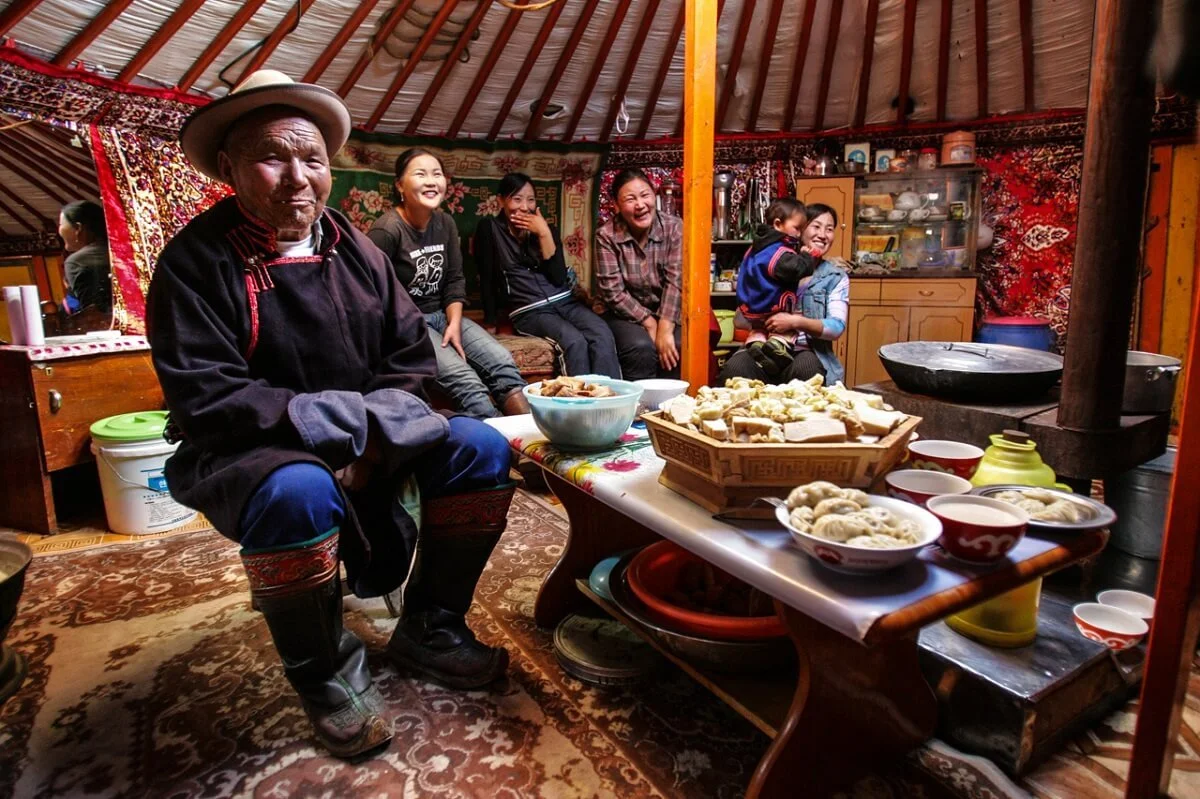
On the vast, fence-free steppe, survival often depends on the kindness of strangers. This has led to a cultural "Unwritten Law": no guest is ever turned away.
In a traditional nomadic home, the door is rarely locked. Even if the family is away, they often leave food and tea ready for a weary traveler. In return, a guest is expected to follow the Traveler’s Code—respecting the hearth, the elders, and the sacred space of the home.
Further Exploration
Read: The Nomads of Mongolia by Purev Bat-Ochir – A deep ethnographic study of herding techniques.
Modern Nomads: The Digital Steppe
While the core traditions remain, 21st-century nomads are masters of adaptation. It is common to see:
Solar Panels: Powering televisions, satellite phones, and LED lights inside the Ger.
Motorcycles: Used alongside horses for faster herding across vast distances.
Smartphones: Herders use 4G networks to check market prices for cashmere and weather forecasts for the coming Dzud (winter storm).
Watch: Life With Mongolian Nomads (Kate Humble Documentary)