

Mongolian
Culture
Three thousand years of nomadic life — a civilisation built on movement, community, and a deep reverence for the open sky.
I — The Nomadic Way of Life
For over 3,000 years, the heart of Mongolian culture has been defined by seasonal migration. Living in the Ger — a portable, circular dwelling perfectly adapted to the elements — nomads maintain a harmonious balance with nature guided by the ancient rhythms of the steppe.
"A Mongolian is born in a Ger and dies on the Steppe."
Ancient Mongolian ProverbThis proverb captures the essence of a lifestyle that has remained fundamentally unchanged for millennia — a life defined by complete mobility, deep familial bonds, and a profound respect for the Eternal Blue Sky.
The Architecture of Freedom — The Ger
The Mongolian Ger (Yurt) is one of the world's most ingenious pieces of architecture. It can be assembled or disassembled in under an hour, making it the perfect home for a life on the move.
- The Toono (Crown): The circular skylight at the top — a connection to the heavens and a natural sundial.
- The Hana (Lattice): Expandable wooden walls that provide flexibility and strength against fierce steppe winds.
- The Felt: Made from sheep's wool, thick layers provide insulation from −40°C winters and summer heat alike.
The Four Seasons of Migration
- Spring (Urtuu): Critical for newborn livestock — camps are sheltered in low valleys.
- Summer (Zuslan): The season of abundance. Wide-open pastures near water sources to fatten the herds.
- Autumn (Namarjaa): Preparation time — families harvest hay and produce dairy stores for winter.
- Winter (Övöljöö): Camps tuck into mountain valleys or behind stone walls to block freezing winds.
The Unwritten Law — Hospitality
On the vast, fence-free steppe, survival often depends on the kindness of strangers. This has given rise to the cultural "Unwritten Law" — no guest is ever turned away. Even if the family is away, food and tea are often left for a weary traveller. In return, guests follow the Traveller's Code — respecting the hearth, the elders, and the sacred space of the home.
Modern Nomads — The Digital Steppe
- Solar Panels: Power televisions, satellite phones, and LED lights inside the Ger.
- Motorcycles: Used alongside horses for faster herding across vast distances.
- Smartphones: Herders use 4G to check cashmere market prices and forecast the coming Dzud (winter storm).
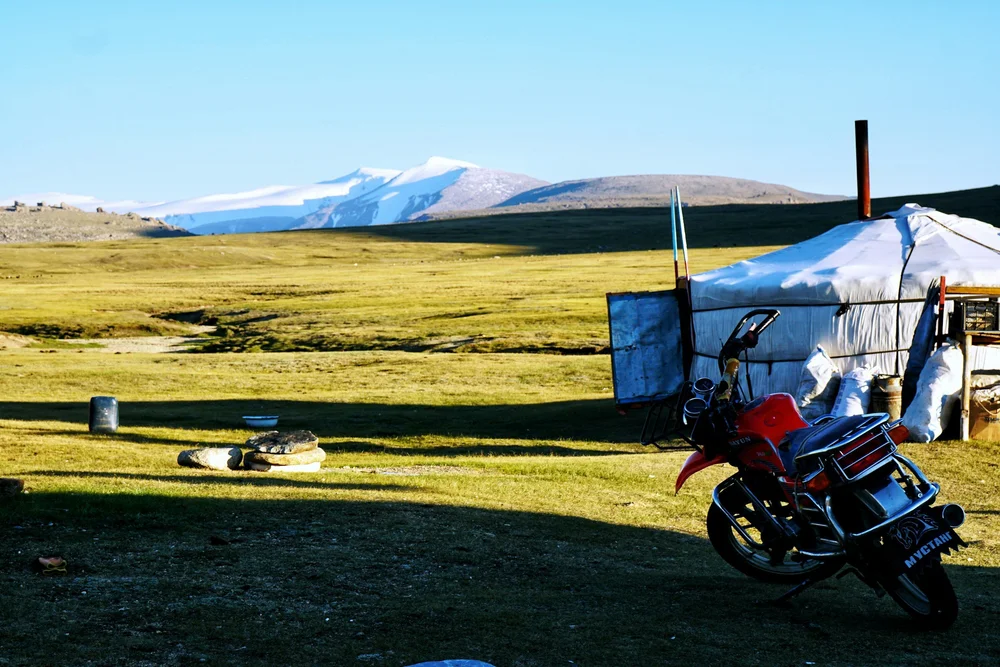
A traditional Mongolian Ger — portable, elegant, and perfectly engineered for life on the move.
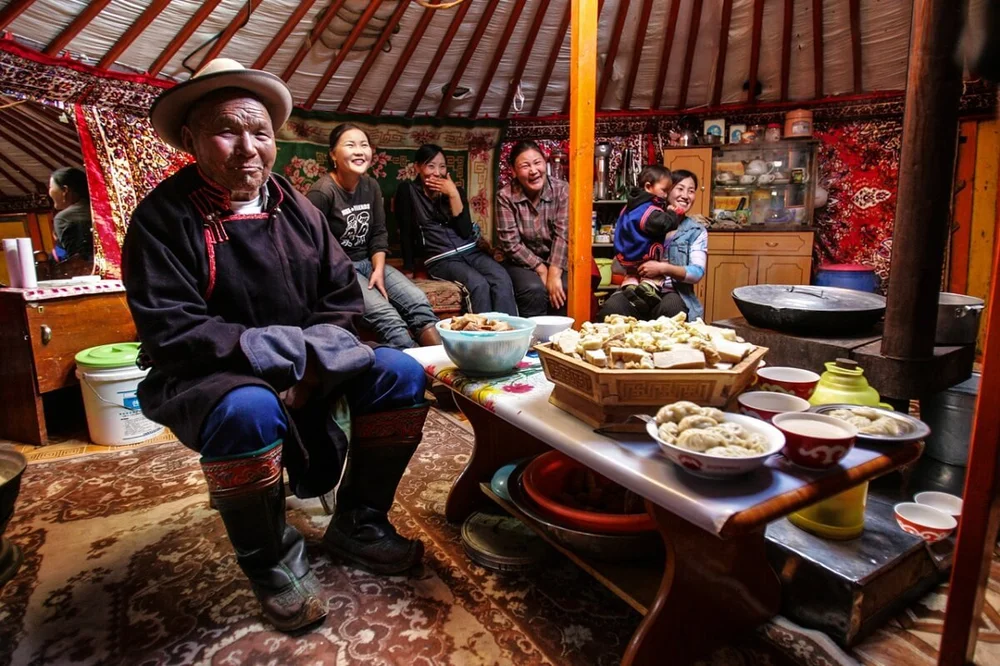
The Unwritten Law — hospitality is sacred on the steppe. No guest is ever turned away.
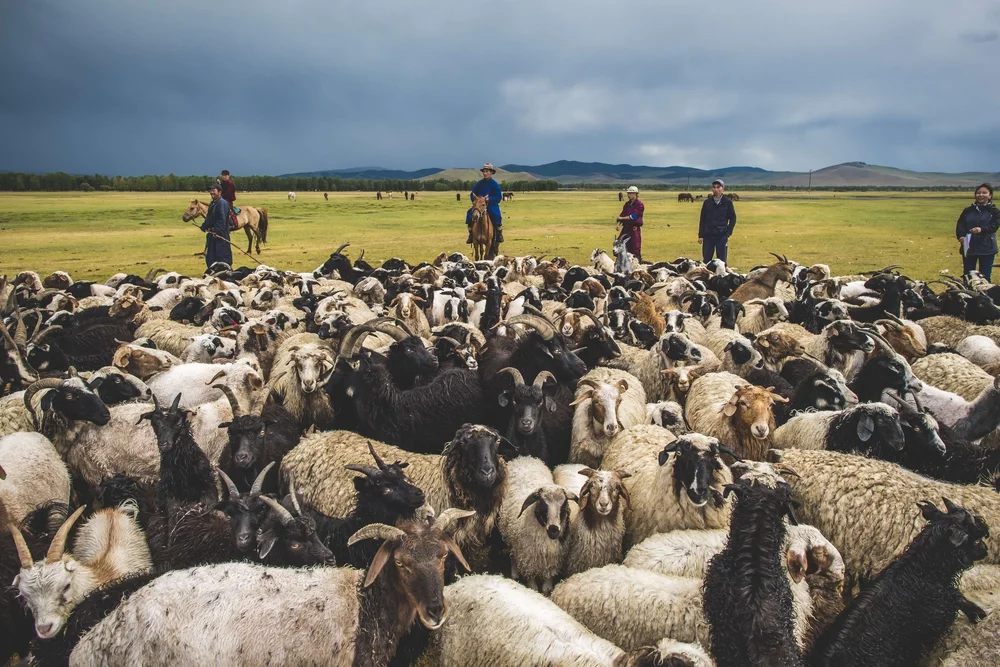
The five muzzles — the nomadic economy built on horses, sheep, goats, cattle, and camels.
Taban Khushuu Mal — the nomadic economy
"The steppe does not belong to us. We belong to it."Mongolian Nomadic Saying
II — Mongolian Horse Culture
In Mongolia, the horse is more than an animal — it is a spiritual companion and a symbol of freedom. The culture revolves around the Five Muzzles of livestock, which provide the food, transport, and materials essential for survival in the wilderness.
Mongolia has one of the highest horse-to-human ratios in the world — roughly 13 horses per person. The horse permeates every aspect of life, from Naadam racing to the spiritual practice of reading a horse's movements.
Mongolian horses are a distinct breed: compact, hardy, and capable of surviving on sparse pasture through brutal winters with no human supplementation. They have been largely unchanged since the time of Genghis Khan.
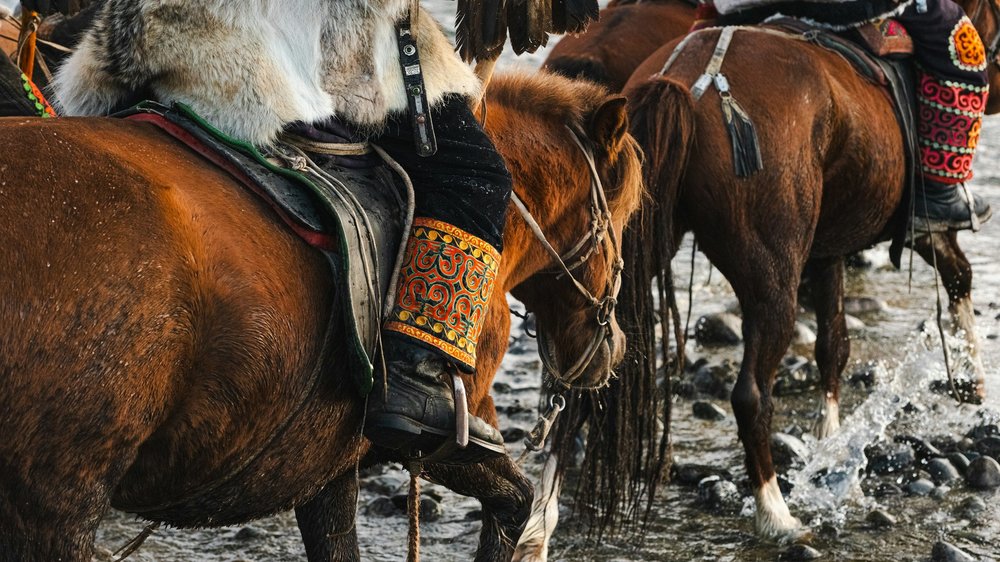
The horse is at the heart of Mongolian culture — a spiritual companion as much as a working animal.
III — Music & the Morin Khuur
Mongolian music is a reflection of the landscape itself — characterised by the haunting beauty of Khoomei (throat singing) and the Morin Khuur (horse-head fiddle). Both art forms are recognised by UNESCO as intangible cultural heritage.
Khoomei (throat singing) is one of the world's most extraordinary vocal techniques — a single singer simultaneously producing a bass drone and a high melodic overtone. It mimics the sounds of wind, water, and the wilderness of the steppe.
The Morin Khuur (horse-head fiddle) is the national instrument of Mongolia. Its two strings are traditionally made from horse hair, and its music is said to contain the soul of the horse within it.
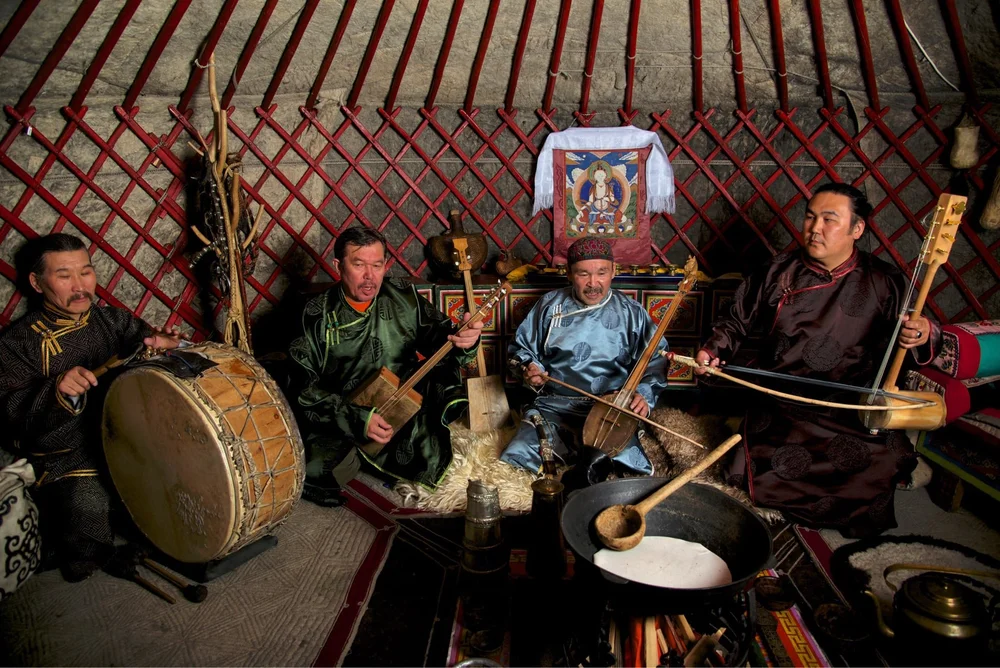
Huun-Huur-Tu — one of Mongolia's most celebrated throat singing ensembles, now known worldwide.
IV — Naadam: The Three Manly Games
The Naadam Festival is the pinnacle of Mongolian cultural expression — celebrating wrestling, horse racing, and archery. Held every July, it is a vibrant showcase of strength, skill, and national pride that dates back to the era of Genghis Khan.
Every July 11–13, the National Naadam Festival takes over Ulaanbaatar's National Stadium. Regional Naadam events happen across the country throughout July — smaller, more intimate, and often more authentic.
"Naadam is not just a festival. It is a living connection to every Mongolian warrior who ever drew a bow, rode a horse, or stepped onto the wrestling ground."
Valley Tour — Ulaanbaatar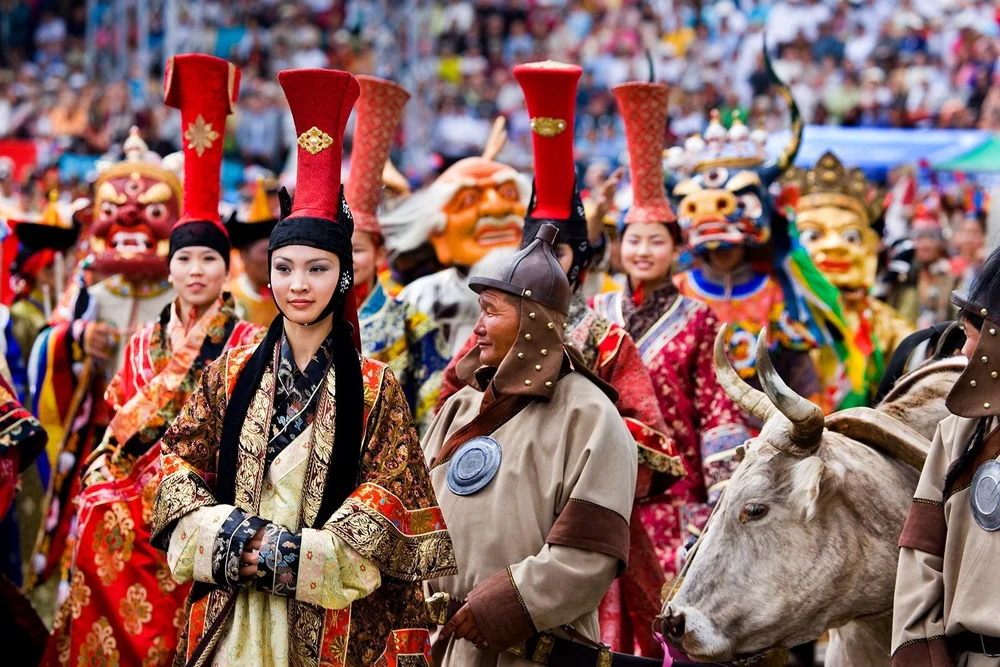
Naadam — held every July 11–13, celebrating Mongolia's three ancient sports with national pride.
V — Mongolian Cuisine
Traditional Mongolian diet is divided into "White Foods" (dairy) for summer and "Red Foods" (meat) for winter — a seasonal culinary rhythm perfectly adapted to the nomadic life on the steppe.
Mongolian cuisine is built for energy, warmth, and endurance. The two food groups form the backbone of the nomadic diet — white foods dominate in summer when herds are producing milk, red foods sustain through the brutal winter months.
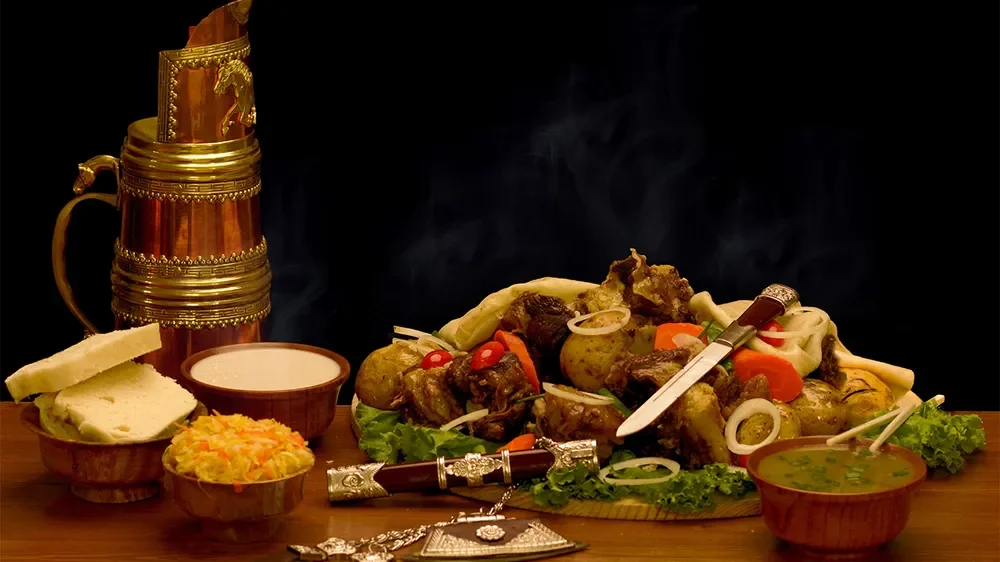
White and red foods — the two pillars of a nomadic diet engineered for survival and celebration.
VI — Spirituality & Belief
Mongolian spirituality is a unique blend of Shamanism and Tibetan Buddhism — the Eternal Blue Sky meets the Dharma wheel. Faith is woven into every aspect of daily life, from the offering of milk to the spirits of the land to the chanting of monks in ancient monasteries.
Mongolia's spiritual life defies easy categorisation. Shamanism — the worship of the Eternal Blue Sky (Tenger) and earth spirits — has roots going back 3,000 years. Tibetan Buddhism was introduced in the 13th century and became the dominant faith by the 16th century, existing in remarkable harmony with shamanic traditions.
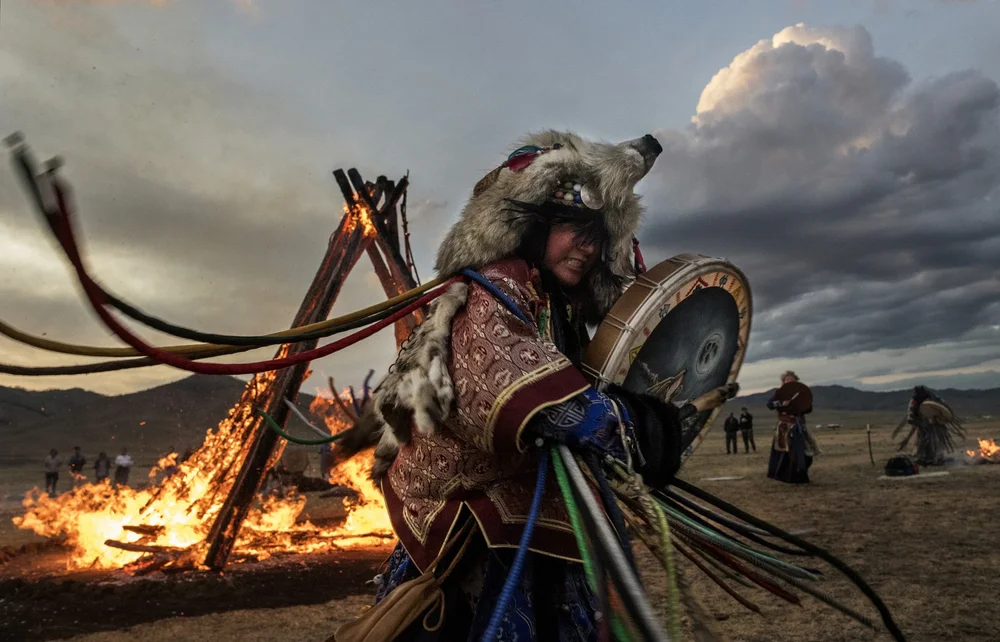
Shamanism and Buddhism coexist in Mongolia — a spiritual landscape as vast and layered as the steppe itself.
Experience Mongolian culture in person.
Stay with nomadic families, attend Naadam, learn throat singing — we'll build it into your itinerary.